While the industrial refrigeration industry in the U.S. is served by traditional trade organizations like the International Institute of All-Natural Refrigeration (IIAR) and Refrigerating Engineers & Technicians Association (RETA), another trade group has taken a different approach, forming a collaboration under the auspices of a major university.
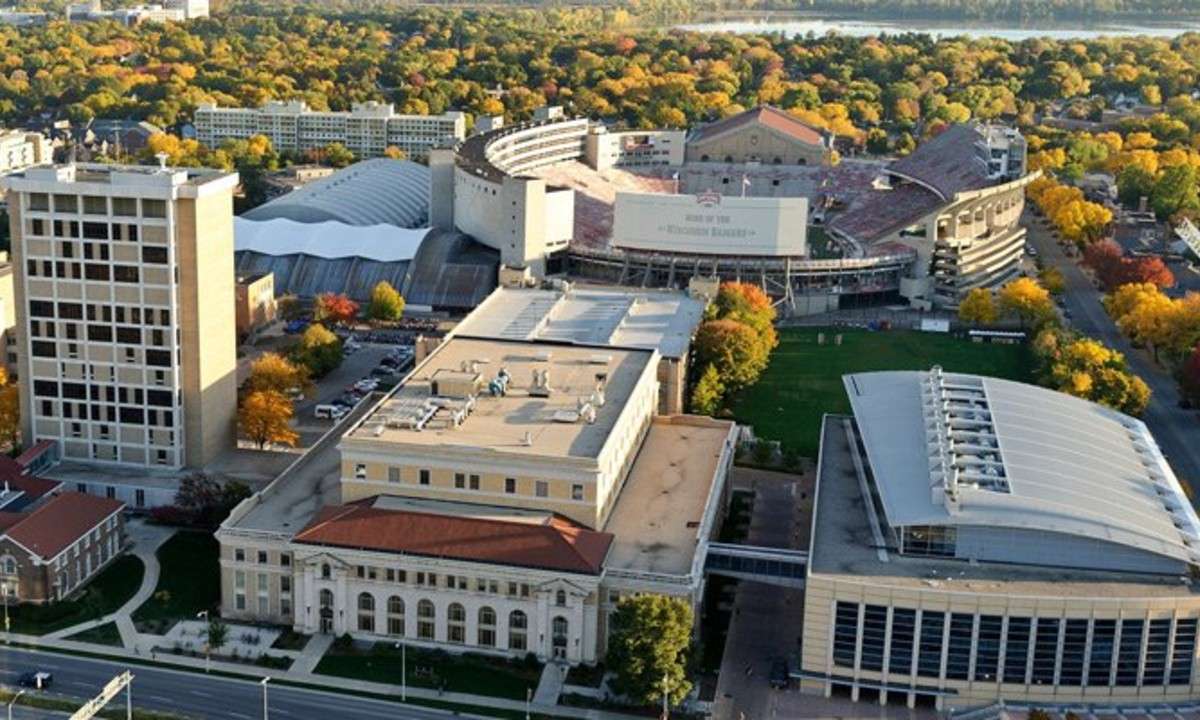
That group is the Industrial Refrigeration Consortium (IRC), a partnership between the University of Wisconsin-Madison and mostly food-industry end users of refrigeration such as food processors and cold-storage warehouses primarily employing ammonia (R717) but also other natural refrigerants. The IRC is wholly funded by its member organizations.
Members include American Foods Group, Cargill, ConAgra Brands, DOT Foods, General Mills, HEB, KraftHeinz, Land O’Lakes, McCain USA, Sargento, Target, Tropicana Products, Tyson, Wells Enterprises and Xcel Energy.
The IRC was formed in 2000 by Doug Reindl, Professor of Mechanical Engineering and Engineering Professional Development at the University of Wisconsin-Madison, who continues to serve as Director. Reindl and the IRC staff provide end users and the wider industrial refrigeration industry with research, writing, education and technical-support services that aim to improve the safety, reliability, efficiency and productivity of their refrigeration systems.
ATMOsphere recently spoke with Reindl to learn more about the IRC. The following interview has been edited for clarity and length.
Why did you launch the IRC?
Early in my career, I had the good fortune to get involved [at the University of Wisconsin] with the predecessor to the IRC, which focused on HVAC and refrigeration and was largely funded by EPRI, the Electric Power Research Institute. That gave me an opportunity to get out in the field and actually work in facilities and do projects in “the real world” instead of being stuck in a lab somewhere on campus.
Around that time [the former energy and commodities company] Enron was pushing to deregulate the electric-utility industry. The part of EPRI that funded us, the customer-systems division, was impacted by that, and we lost funding. We had to decide what we were going to do as we were seeing in the industrial area a lot of acute needs that were unmet.
So we organized a stakeholders meeting in 2000 to get some opinions from end-user food companies, insurance companies, associations like ASHRAE and IIAR, consulting engineers, equipment manufacturers and regulators like OSHA [the Occupational Safety and Health Administration]. The single largest element of that group of industry stakeholders was the end users who were pretty outspoken and basically identified a number of needs that were unmet. A group of about 10 agreed to put together a plan to form what is now known as the IRC and were gracious enough to provide us some seed funding. We put it together in really short order and were off and running.
What are the IRC’s key activities?
The activities that we’re involved in fit together like three legs of a stool. First is research we conduct in the area of industrial ammonia refrigeration systems that ranges from controls for energy efficiency to sub-system and system-level optimization. Second is knowledge transfer through a range of channels from a series of short courses aimed at practicing professionals to written materials that include guidebooks and technical papers; all of this aims to transplant knowledge to the industry that we’ve been able to develop in collaboration largely with end users. Finally there are the projects that we do in the field. Some are research-related and some are what I would call services-related; someone will say, “We’re having trouble with some aspect of this system; can you take a look and see what you think?”
Regarding research and also the development of written material, it was interesting to me early on that, despite being around for 100 or 125 years, the ammonia refrigeration industry was largely built by artisans, some really sharp people, without much of a written record. When I looked at ammonia refrigeration at that time, I thought, “Where are the books?” That’s not to say there wasn’t anything, but it was pretty slim pickings. We looked at that as an opportunity where we could make a contribution.
The three legs of the stool really fit together and connect us with the real world so that when we’re teaching a professional development course, we can relate to that audience. Our goal in the professional development courses is to make that content something that end users can apply immediately.
I kid the end-user executives that cold is the number-one unlisted ingredient on many of their products.
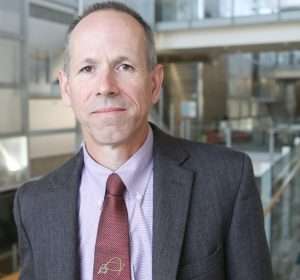
Doug Reindl, Director of the Industrial Refrigeration Consortium
When we started in 2000 it was also fairly early in the era of OSHA’s process safety management [PSM] and the EPA’s risk management plan [RMP]. End users [of ammonia refrigeration] were grappling not only with making cold but also the new regulatory requirements that they were going to be under. It was actually an interesting confluence of events and gave us an opportunity.
We weren’t in there working on their PSM and RMP programs but were trying to develop people to be able to do that as part of professional development. We now have a whole series of professional develop courses focused on PSM and RMP, including a credential called the Process Safety Management Professional (PSMP).
The other thing that we’ve done with the IRC is host best-practices workshops where end users come together to cultivate and share best practices – mostly around safety. The end users have done some pretty innovative things, and they’ve been very willing to share that as there’s no competition in safety.
We also host a Research and Technology Forum every May in Madison. It’s an opportunity to share what we’ve been working on in the past year, but we frequently try to stretch the attendees a little bit by pulling in some of the research activities that are happening around this campus. For example, we had a group that’s been working for a number of years on the IceCube Neutrino Observatory at the South Pole; they were part of the team that discovered the Higgs boson [subatomic particle].
Is it unusual for a university to encompass a group focused on industrial refrigeration like the IRC?
I don’t know of anything else quite like it. The University of Illinois-Champaign has the Air Conditioning and Refrigeration Center [ACRC], and Purdue University has Herrick Labs, but they’re largely focused on pre-competitive research, mostly in laboratories. I don’t know of another academic group with an industrial refrigeration focus, ammonia principally.
How would you distinguish what IRC does from what associations like IIAR do?
IIAR’s mission has always been advocacy and education, and we weren’t going to be in the advocacy business. We were going to be in the technical side and education, so if there was an overlap, it was going to be education. Also we don’t create standards like IIAR, though we’re all members of IIAR, so we’re heavily engaged in helping them in the standards development process.
IIAR started out focused on ammonia, and now they changed the A in their name from Ammonia to All-Natural. Is the IRC looking more at natural refrigerants besides ammonia, particularly CO2 (R744)?
Our focus is pretty much ammonia and some CO2 and hydrocarbons, and we’ve also done some research in the area of water as a refrigerant. There were two end users pushing really hard at using CO2 ammonia cascade, and it got some penetration into their facilities, but then it didn’t really go beyond that, and it stalled out.
In terms of CO2-only, there’s some penetration into the market, but it’s still fairly small. And I think there are a couple reasons for that. One is that on the industrial side – we kid a little bit about this – the rate of change is glacial. Some of that is that the facilities want to make sure that whatever they deploy is actually going to function, because they run these things 24/7/365, and they can’t tolerate outages. And secondly, one of the reasons ammonia has been around for 150 years is it works really well. And so they’re saying, “Why am I supposed to be changing this?” They have done some things to address hazards in facilities, going to secondary fluid systems and that sort of thing. But they haven’t really made a 45-degree turn and said, “Let’s jump over here.”
You decided not to address fluorinated refrigerants?
Among those that we were serving, ammonia was where the greatest need was. I went through the phaseout with CFCs and then HCFCs, and now we’re in the phasedown of HFCs. And every one of those has brought trepidation, but the industrial food industry has largely said, “We’ve still doing our thing over here.”
As a rule, ammonia is used safely. But every so often there’s an incident and a hit to the reputation of ammonia. How do operators deal with that?
There are accidents that happen with all refrigeration systems, including those using fluorochemical refrigerants, but those with ammonia often grab the media headlines. The nature and scale of this infrastructure mean there will be incidents – we are working to drive those to zero. When end users recognize the importance of this infrastructure, they provide greater support for the ongoing operation and preventive maintenance to ensure their continued safe operation. From a business-continuity perspective, they work to continuously improve on the inspections, tests and routine maintenance required to ensure uptime and reliability of their refrigeration infrastructure; those efforts also help to that minimize the likelihood of uncontrolled refrigerant releases.
There continues to be a need to provide audience-appropriate and practical knowledge to leadership within end-user companies on what is required to effectively manage ammonia refrigeration infrastructure. We’ve provided quite a bit of ammonia education to leadership in these companies, giving them some knowledge on the hazards and regulatory requirements, as well as some appreciation for how this fits into their business.
What is your opinion of efforts by manufacturers to reduce the charge of ammonia in industrial refrigeration with low-charge packaged and centralized systems?
There was a big push on that five or 10 years ago but I think it’s let up a little bit. I would say that where the industry has settled out is, “Let’s get the charge that’s needed to make our systems function reliably.” If you’re going to try to cut it to the razor’s edge, that’s usually going to be met with some undesirable operational consequences.
The other realization is that a 700-pound [318kg] ammonia system in an ice rink has just as much hazard to the [technician] on the ground as a 70,000-pound [31,751kg] system in a large food processing facility. Clearly, if you’re releasing thousands of pounds, you’re going to affect more people on site than potentially off site. But the risk doesn’t go to zero [with 700 pounds].
There was a big push in 1992 and 1993 to get systems carved out so that they’re under the PSM regulatory threshold of 10,000 pounds [4,536kg]. The thought was, “If we can get below that, we don’t have to do anything.” We know that’s not a recipe for success. So I think that motivation has largely disappeared.
We’ve really tried to emphasize that regulatory programs like PSM and RMP shouldn’t be viewed through a lens of “how can I satisfying regulators?” Rather the focus should be on what’s required for your business and to protect your most valuable capital, the human capital that you have working in these facilities, and to protect your infrastructure and the continuity of your business operation. I kid the end-user executives that cold is the number-one unlisted ingredient on many of their products. So let’s make this a business case, not a regulatory case. And when you look at it from a business perspective, the regulatory stuff comes along for the ride.
Would you say that ammonia is the most efficient refrigerant?
When you look at it thermodynamically, it’s definitely at or near the top. But then there are the realities of putting ammonia in a system and using the materials that are allowable or usable like carbon steel, stainless steel, aluminum and some of the super alloys. In higher-temperature applications like HVAC and chillers, other refrigerants benefit from excellent heat-exchanger materials that we can’t use like copper. But as you go to lower temperatures, ammonia continues to win.
What’s your biggest recommendation for improving efficiency?
A lot of these facilities could make operational adjustments without spending capital. For example, they’re running the system at too low of a suction pressure for the process needs. We’re in winter-time operation now, so be a little bit smarter about managing the high-side pressure. We want them to understand what the levers are, what the limitations are and how they can implement that systematically to improve the efficiency of the plant.
What would you say is the topic that the IRC is most focused on these days?
In terms of education, there’s a huge transition in industrial refrigeration that has been occurring with a lot of experienced people retiring, at least at the technician level. No one coming up really wanted to do the micro dirty job. They want to go to school and get their first job as the VP. But we still need trade-level people. I think we’re over the hump now that there are a lot of younger kids that are interested and able to work in the trades. Even with engineers, we’re trying to show them there’s a lifetime of opportunity in the food industry, including refrigeration. So that’s a big point of emphasis.
We have technicians from end users, and some contractors come to our courses, and we try to give them an understanding of the technology so that, when they get training on the specific operating procedures for their facility, they know what’s going on.
Also a signature and core mission for us since the beginning has been to improve the safety, efficiency, reliability and productivity of this infrastructure, and that just never ends.
Finally, I want to acknowledge and recognize that the IRC is truly a total team effort. From the IRC’s technical staff like Assistant Director Todd Jekel and Research Engineer Marc Claas to the scores of engineers, technicians, EHS (environment, health and safety) professionals and leadership in IRC member companies that we have had the good fortune to collaborate with during the past quarter century, it is this total team that makes it all happen. Together, this spirit of collaboration has enabled us to be a part of making a difference across their respective organizations and the industry as a whole.