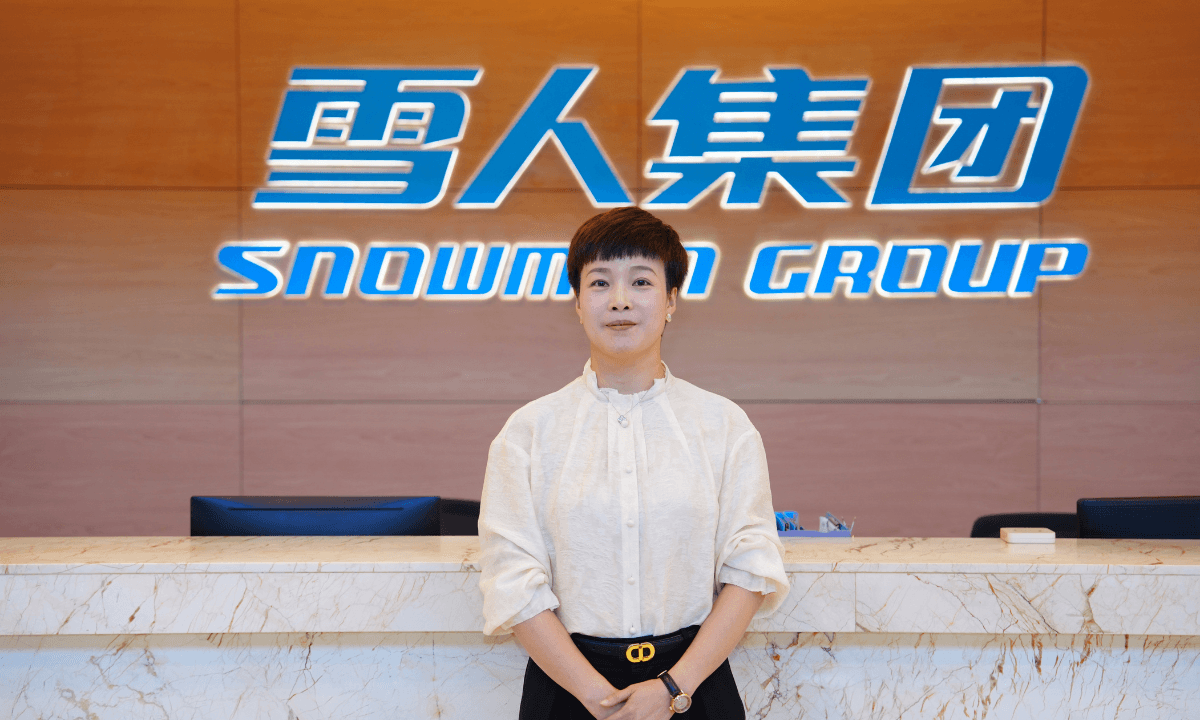
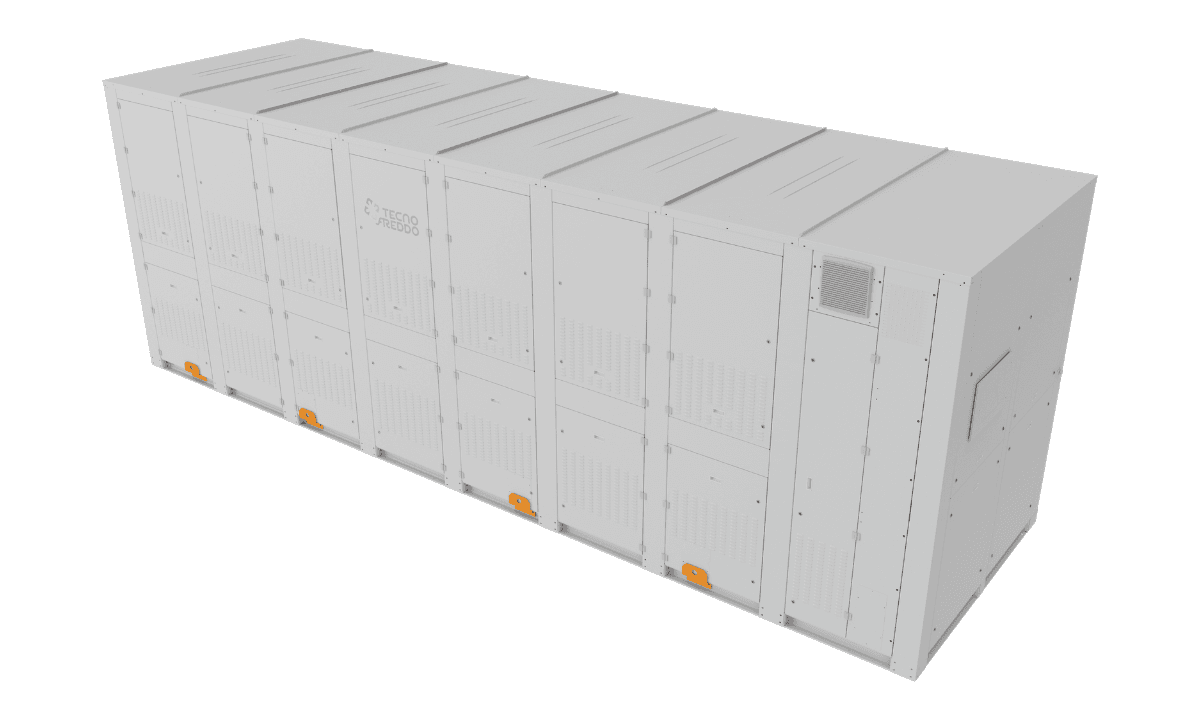
MB Group Solutions, an Australian contractor specializing in commercial refrigeration and air-conditioning, designed and installed a 1MW (284TR) CO2 (R744) refrigeration system at a production facility for sausage manufacturer Slape & Sons.
MB Group designed the system based on performance specifications outlined by the Australian engineering consulting group MINUS40. Christopher Paulson, Director of MB Group Solutions, and Michael Bellstedt, CEO of MINUS40 Group, presented the project at ATMO Australia 2025. The event, organized by ATMOsphere, publisher of NaturalRefrigerants.com, was held May 12–13 in Sydney.
In the new Dry Creek, Adelaide, plant, a 2,500L (660gal) CO2 separation vessel, pressurized at 38bar (551psi), feeds both the DX and pumped liquid overfeed circuits. Heat reclaim provides hot water for sanitation and subfloor heating.
“The CO2 separation vessel at 3.3°C [37.9°F] provided an efficient match to the production floor’s 3.0°C [37.4°F] SST [saturated suction temperature] to maintain a room temperature of 10°C [50°F],” said Paulson. “Moreover, the DX system shifted into transcritical operation only four times over the summer from January 1 to April 1, even with ambient temperatures up to 46°C [114.8°F].”
System specs: Slape & Sons sought a natural refrigerant solution using either ammonia (R717) or CO2, with the system providing low- (LT) and medium-temperature (MT) storage, processing floor climate control, dehumidification, and both hot and cold water. CO2 proved to be more efficient.
- The pumped liquid CO2 meets the 510kW (145TR) cooling capacity of the production floor and the 25kW (7.1TR) demand for microwave cooling at 16°C (60.8°F).
- The DX system meets the LT requirements, including a 36kW (10.2TR) capacity at −40°C (−40°F) SST for blast freezing and 60kW (17.1TR) at −28°C (−18.4°F) SST for frozen storage, and the MT loads, including 170kW (48.3TR) at −6°C (21.2°F) SST for cold storage and 15kW (4.3TR) for chilled water at the same SST for product mixing and equipment cooling.
- A heat reclaim primary heating loop provides 700kW (199TR) of heating capacity at 75°C (167°F) for processing hot water and freezer subfloor heating with a 20°C (68°F) inlet temperature.
Lessons learned: Using the same CO2 separation vessel for the DX evaporators and the pump circuit proved a little tricky, according to Paulson. “However, with careful management, it’s working well,” he said.
- In hindsight, Bellstedt reported, it was a mistake to combine the heat recovery from the MT and processing floor circuits in a single heat exchanger. “Since the processing floor stays subcritical, it would be better to separate them and use the processing floor discharge for subfloor heating and the MT for hot water,” he said.
Energy management: The state of South Australia experiences consistent periods of negative power during daylight hours, reaching a value of −AU$0.05 (−US$0.03/−€0.03) per kWh even in the winter, according to Bellstedt. However, the cost of electricity can climb to AU$0.70 (US$0.45/€0.40) per kWh during evening hours.
- The Slape & Sons CO2 refrigeration system takes advantage of the varying electrical rates and demand response episodes by storing energy during periods of negative electrical costs in two interconnected LT thermal storage tanks, which are not yet in service.
- The system supplies a cooling capacity of 235kW (66.8TR) at −28°C SST for thermal storage. The tanks, filled with 66,000L (17,435gal) of 45% propylene glycol, will provide a total LT cooling capacity of 1.45MW (412.3TR) for MT discharge.
- The load shifting will save AU$155 (US$100/€88) per day or AU$56,575 (US$36,480/€32,080) per year, Bellstedt estimated.
Quotable: “After 20 years of doing energy efficiency work, it is odd to think that the thermal storage tanks will use more power but save money and CO2e emissions,” said Bellstedt, adding that the electricity available in the region in the evenings comes from coal-fired power plants.