Integrating an isobutane (R600a) heat pump into a supermarket’s transcritical CO2 (R744) booster refrigeration system can cut space-heating operating costs by as much as 91% compared to a natural gas boiler, according to new research from the University of Southern Denmark.
The study, which modeled the energy and cost impacts for a Stockholm supermarket, also found that replacing the gas boiler with the R600a system could lower greenhouse gas emissions by around 94%.
Researchers compared several heating options: a conventional gas boiler, a 100%-efficiency electric boiler and connection to the city’s district heating network. The R600a heat pump – linked to the refrigeration system and the district heating network to allow the supermarket to sell excess heat back to the grid – outperformed all alternatives in both cost and emissions reduction.
The findings were presented by Guruchethan Matha, a Postdoctoral Researcher at the University of Southern Denmark, at the International Institute for Refrigeration (IIR)’s inaugural International Conference on Refrigeration Adapting to Rising Temperatures (Adaptation 2025), held August 10–13 in Manchester, England, and hosted by the Institute of Refrigeration UK (IoR).
Study model
To assess different heating strategies, the researchers modeled a Stockholm supermarket with a low-temperature (LT) load of 35kW (10TR) and a medium-temperature (MT) load of around 100kW (28.4TR), the latter varying with ambient conditions. The LT system operates at −32°C (−25.6°F) and the MT system at −8°C (17.6°F).
The analysis was based on data from January 5, 2025, incorporating real ambient temperatures and electricity, gas and prices for selling and purchasing heat. It also factored in the emissions intensity of natural gas, Sweden’s electricity grid and Stockholm’s district-heating network.
Results
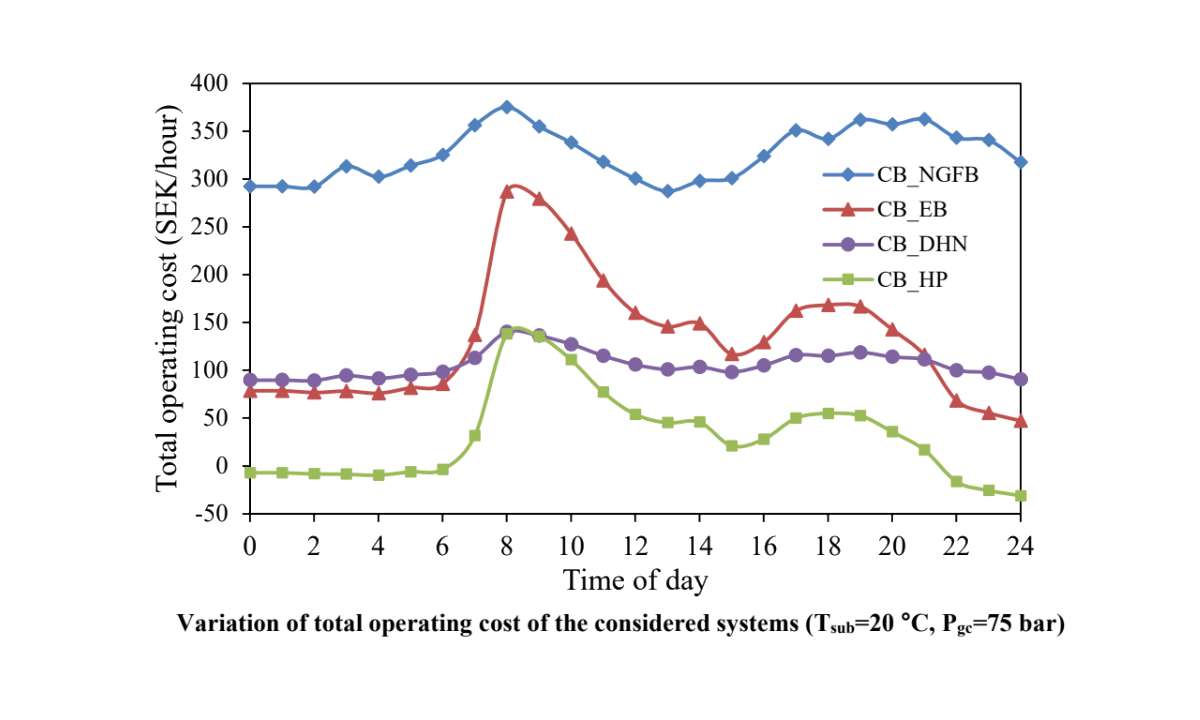
Compared to other heating options, the R600a heat pump reduced operating costs by 70%, 76% and 91% compared to the district heating network, electric boiler and gas boiler, respectively.
These savings stem from Sweden’s relatively high natural gas prices compared to electricity and the supermarket’s ability to generate revenue by selling surplus heat to the district heating network. In fact, the heat pump operated at negative net cost many times during the day. However, heat-pump operating costs still depended on fluctuating electricity prices.
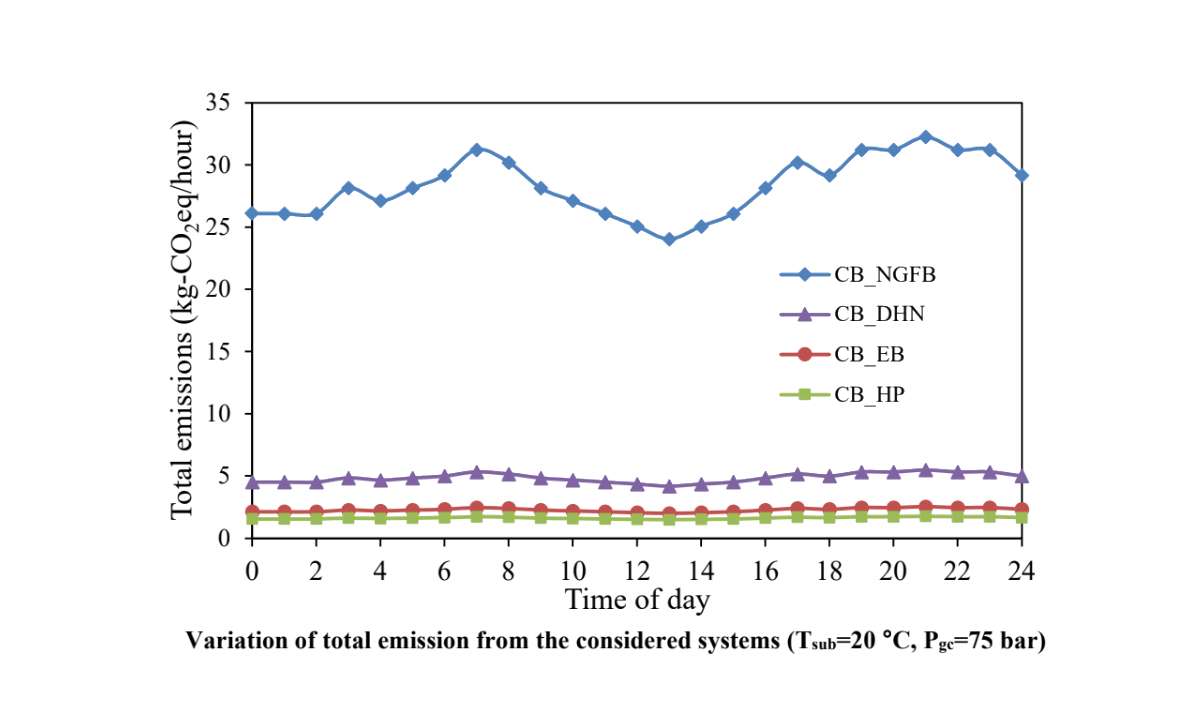
On the emissions side, the differences between the R600a heat pump, electric boiler and district heating network were smaller, reflecting the low carbon intensity of Sweden’s electricity and Stockholm’s district heating supply. Respectively, these options represented a 94%, 91% and 83% reduction in emissions compared to the natural gas boiler.
The study also found that the heat recovery potential of the R600a system exceeded that of a CO2 booster alone, justifying the added capital cost of the heat pump.
The researchers identified optimal operating strategies to help maximize profitability while maintaining energy efficiency, depending on market conditions.
When electricity prices are lower than the purchase price of heat, the supermarket should operate the system at a gas cooler pressure of 90bar (1,305psi) with a subcooling temperature of 15°C (59°F). When electricity prices are higher than the purchase price of heat, it should be operated at 75bar (1,087psi) with subcooling temperature of 25°C (77°F).