Konvekta brings CO2 MAC tech to Agrictechnica 2025
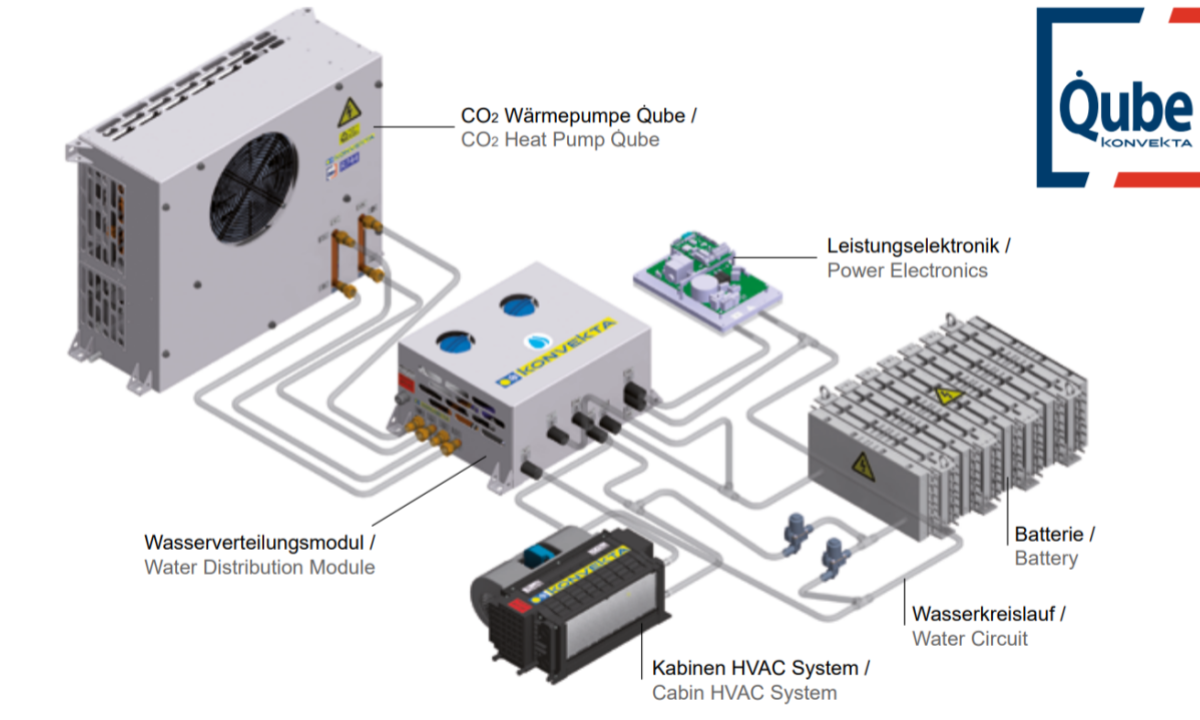
Konvekta has brought its CO₂-Qube MAC system for electric agricultural machinery to Agritechnica 2025, an agricultural technology show being held November 9–15 in Hanover, Germany. The CO₂-Qube, which uses CO2 refrigerant, is designed to provide comfort heating and cooling to the cabin as well as battery pre-heating and heating and cooling. It has a heating capacity of 8.5kW (2.4TR) and a cooling capacity of 8kW (2.3TR). The CO2-Qube at Agritechnica 2025 is a concept and is currently under development, according to Konvekta. The Germany-based company manufactures heating and air-conditioning solutions for commercial vehicles, including CO2 heat pumps for electric buses.
Panasonic CO2 condensing units used in low-temp aerospace application
Panasonic has published a new article detailing the use of its CO2 condensing units in an aerospace application requiring temperatures as low as −25°C (−13°F) for product storage. England-based HVAC&R contractor Green Cooling chose the Panasonic condensing units for the project, selecting six 10HP and two 4HP models.
“The Panasonic condensing refrigeration units were an easy choice to select for this project and came out on top compared to the competitor units,” said David Blinkhorn, Consulting Technical Director at Green Cooling. “The units not only met the environmentally friendly criteria, but they are also capable of keeping a precise and constant temperature and minimises fluctuations, which was crucial for preserving the critical storage temperatures in this project.”
SWEP’s BPHEs help CERN upgrade its particle detectors
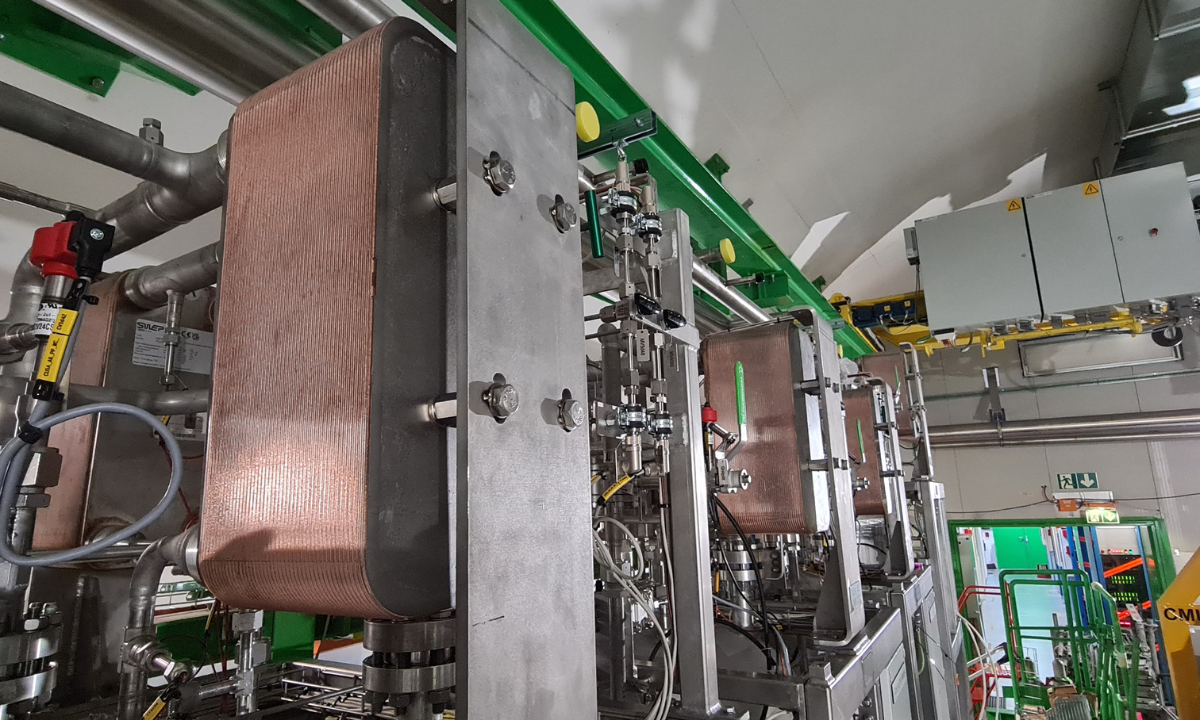
SWEP has supplied braze plate heat exchangers (BPHE) to CERN (the European Organization for Nuclear Research) as part of a project to upgrade its ATLAS and CMS particle detectors. ATLAS and CMS will be used in CERN’s High-Luminosity LHC program, which will feature high levels of radiation and require a refrigeration system capable of reaching temperatures as low as −40°C (−40°F) to maintain the detectors at −25°C (−13°F).
The project requires the existing CO2 (R744)-based refrigeration system to be upscaled by two orders of magnitude, which meant SWEP had to develop a larger BPHE. The result is the Q185H, an updated version of its B185 BPHE with a Q-pipe. SWEP supplied both the Q185H, which served as the evaporator, and the B185 to CERN.
“With the CO2 refrigeration system and performance of up to 1MW [284TR] of cooling down to a temperature of −53°C [−63.4°F], we have been able to push the boundaries of what can be achieved with this natural refrigerant,” said Yann Herpin, Cooling Engineer at CERN.
Enerblue’s newest propane heat pump case study
Italian heat pump and chiller manufacturer Enerblue has published a new case study detailing the installation of its propane (R290) heat pumps at a “major railway maintenance industrial hub.” The four Purplei HP 50.2 heat pumps replaced an existing gas boiler – an auxiliary boiler that can be used with hydrogen and a 100,000L (26,417gal) thermal storage tank were also installed – to provide comfort heating for the 27,000m2 (290,625ft2) facility. The four heat pumps are cascade connected and provide a heating capacity of 900kW (255TR). The heat pumps cut annual emissions by up to 90% for an estimated savings of 672 metric tons of CO2, per Enerblue.