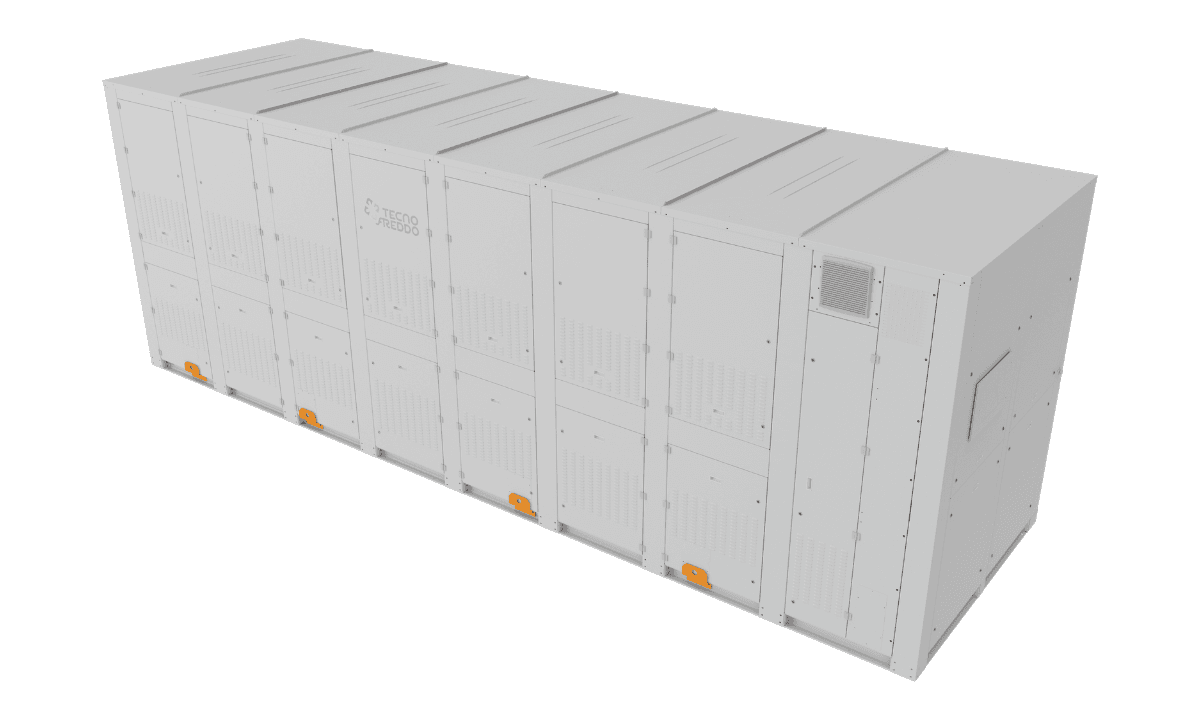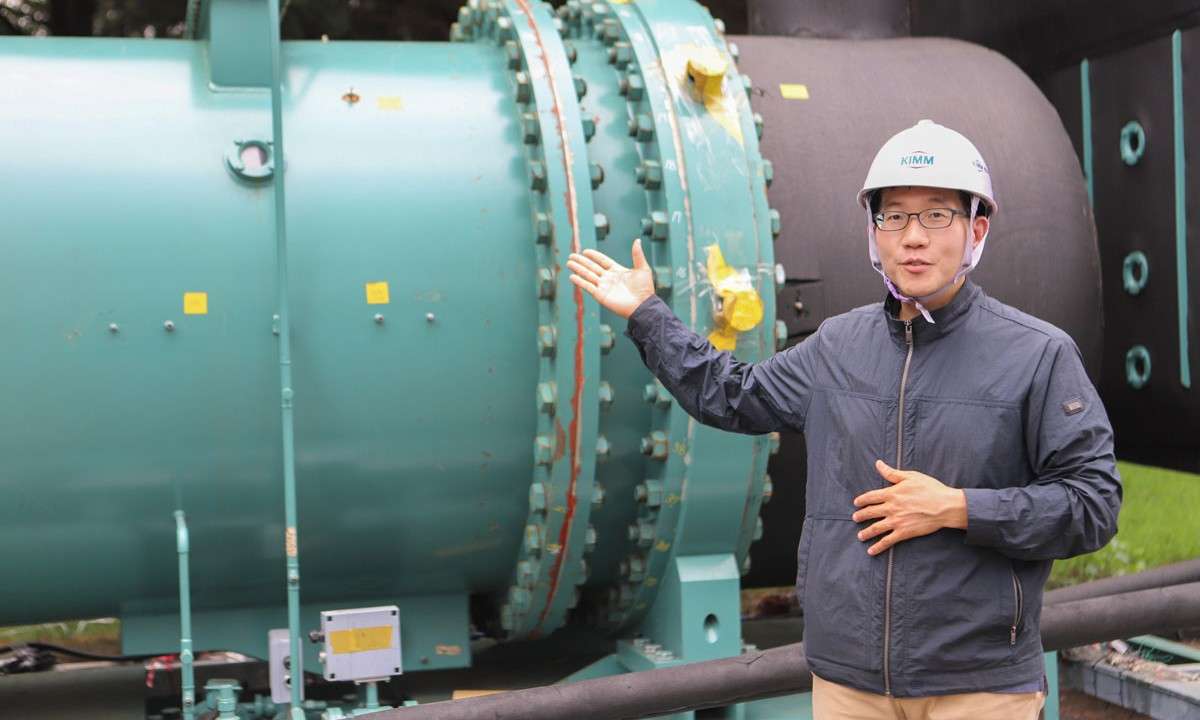
The Korean Institute of Machinery and Materials (KIMM) has developed the country’s first industrial chiller and heat pump with a vapor compression system that uses water (R718) as the refrigerant.
KIMM’s refrigeration system has a cooling capacity of 350kW (99.5TR) and consists of a centrifugal compressor, an evaporator and a condenser.
“For the first time in Korea, we have developed an industrial chiller and heat pump system that uses water as a refrigerant, which had been developed mainly in a small number of advanced countries,” KIMM Senior Researcher Jeong-Cheol Kim told the American Journal of Transportation (AJOT).
According to KIMM President Seog-Hyeon Ryu, the refrigeration system is not a prototype but rather a finished product ready for the market.
“This research is substantially meaningful in that KIMM has successfully commercialized its technology jointly with a research institute spin-off company established through the KIMM’s investment of its original patented technology,” Ryu told the AJOT. “We will continue to devote ourselves to the development of technologies that can contribute to the development of national strategic technologies and also to the revitalization of local economies.”
KIMM is an institute under the jurisdiction of the South Korean Ministry of Science and ICT. The Korean Institute of Industrial Technology (KITECH) and Jinsol Turbo Machinery contributed to the development of these components.
The water-based refrigeration system comes as South Korea prepares to implement the terms of the Kigali Amendment, which it signed in 2023, to freeze its HFC consumption this year before reducing it by 10% by 2029 compared to its average HFC consumption from 2020 to 2022. It also must reduce 65% of its HCFC consumption.
“Following the introduction of stronger refrigerant regulations, there is a growing demand for the development of environment-friendly chiller and heat pump technologies,” said Kim. “We will make all-out efforts so that these technologies can be systematically developed and commercialized within the country.”
Water as a refrigerant
One significant advantage of using water as a refrigerant is its cost-effectiveness. Water is up to 100 times cheaper than conventional chemical refrigerants. Moreover, water’s properties allow for more efficient heat absorption and release, delivering the same cooling effect as traditional refrigerants but with reduced energy consumption and lower electricity expenses.
However, using water as a refrigerant in a vapor compression system also presents challenges. The KIMM team noted that water is difficult to compress and thus requires unique technological approaches. Another challenge was adapting the system to operate within existing industrial frameworks, which typically rely on chemical refrigerants.
American R&D startup Elkhorn Products is developing a refrigeration cycle that uses water as a refrigerant, one that does not leverage the vapor compression cycle but the company’s patent-pending “hydrovaporization” technology.
“For the first time in Korea, we have developed an industrial chiller and heat pump system that uses water as a refrigerant, which had been developed mainly in a small number of advanced countries.”
Jeong-Cheol Kim, Senior Researcher at KIMM