In an online hearing hosted by the U.S. Environmental Protection Agency (EPA) on October 20, a number of manufacturers, trade groups and NGOs expressed their opposition to some of the provisions in the EPA’s proposed reconsideration of the Technology Transitions rule, particularly five- and six-year delays in the launch of new GWP limits for refrigerants used in supermarket and cold-storage refrigeration.
The Technology Transitions rule is one of three pillars of the American Innovation and Manufacturing (AIM) Act, enacted in 2020 at the end of the first Trump administration with bipartisan and industry support. The EPA released the final version of the Technology Transitions rule in October 2023 to accelerate the ongoing transition to more efficient and climate-safe technologies in new refrigeration, heating and cooling systems and other products by restricting the use of HFCs where alternatives are already available.
The proposed Technology Transitions rule, published in the Federal Register on October 3, does not apply to the other parts of the AIM Act, one covering the phasedown of HFC production, the other emissions reduction and reclamation.
In addition to the hearing, public comments on the proposed rule are allowed through November 21 (extended from November 17). Comments, identified by Docket ID No. EPA-HQ-OAR-2025-0005, may be submitted here.
The new proposed rule would do the following:
- Retail food: On January 1, 2027, change the GWP limit of 150 or 300 (depending on charge size and equipment configuration) to 1,400. Change the starting date for GWP limits of 150 or 300 from January 1, 2027, to January 1, 2032. Same applies to remote condensing units except the original date was January 1, 2026, not 2027.
- Cold-storage warehouses: On January 1, 2026, change the GWP limit of 150 or 300 (depending on charge size and equipment configuration) to 700. Change the starting date for GWP limits of 150 or 300 from January 1, 2026, to January 1, 2032.
- Residential and light-commercial air-conditioning and heat pump systems: For equipment manufactured or imported before January 1, 2025, change the deadline for installations from January 1, 2026, to no deadline at all.
The proposal also stipulates changes for refrigerated transport – intermodal containers, industrial process refrigeration and chillers used for semiconductor manufacturing, and industrial refrigeration for centrifuges and laboratory shakers.
NGO comments
David Doniger, Senior Attorney with Natural Resources Defense Council (NRDC), led off the hearing with a strong defense of the original Technology Transitions rule. “The rule is key to ensuring an efficient, affordable [HFC] phasedown by avoiding unnecessary and wasteful uses of those chemicals, keeping HFC demand in line with supply,” he said.
Later in the hearing, Beth Porter, Senior Climate Policy Analyst for another NGO, the U.S. branch of the Environmental Investigation Agency (EIA), pointed out that the existing Technology Transitions rule requirements “were developed over years with robust industry engagement and support,” adding, “The proposed revisions would only create confusion and disruption for industry, undermine U.S. competitiveness in global markets and result in negative environmental and economic impact with no supporting data or evidence of cost savings provided by these changes.”
ATMOsphere, publisher of NaturalRefrigerants.com, also testified at the hearing in support of retaining the deadlines and GWP limits set in the original Technology Transitions rule.
Manufacturers’ viewpoints
Hillphoenix, the leading manufacturer of transcritical CO2 (R744) refrigeration systems to supermarkets in the U.S., is opposed to postponing the current transition dates for supermarket equipment to 2032, said Scott Martin, its Senior Director Industry Relations and Compliance at the EPA hearing.
The current dates “align with our product development cycles and are driving decisions in our industry to invest and build in the United States,” said Martin, who added that Hillphoenix “has massively expanded our CO2 and hydrocarbon portfolios with investments in testing and production capabilities.”
The U.S. commercial refrigeration industry is already able to supply supermarkets with natural refrigerant-based systems. “CO2 systems are proven and widely adopted by many retailers, including Walmart, Target, Aldi, Kroger [and] Costco, just to name a few,” Martin said. In its 2024 Environmental, Social & Governance report, Kroger said it plans to build all new stores with CO2 refrigerant systems starting in 2025.
Components for these systems, such as compressors, valves and controls, are available from “a diversified supply chain with significant U.S. manufacturing footprints,” Martin noted, adding that technician training programs are in place nationwide to support full-scale adoption.
On the other hand, delaying the transition dates “would undermine years of investment, create uncertainty and impose redundant cost,” said Martin. It would also prolong the demand for high GWP refrigerants just as the AIM Act phase-down steps reduce their supply, “thus raising prices for retailers, manufacturers and consumers.”
Some states, notably California, New York and Washington, have already enacted their own HFC regulations, which are in some cases more aggressive than the federal HFC requirements. Weakening the federal regulations will lead other states that are part of the U.S. Climate Alliance “to regulate our industry, creating a patchwork of extreme requirements that will increase compliance costs for manufacturers, contractors, wholesalers and retailers,” Martin said.
Delays would also advantage foreign manufacturers, particularly in China, and could enable outdated equipment to enter the U.S. market, undercutting American factories and workers, Martin said.
“When regulatory changes are delayed or altered so close to implementation, particularly for applications like remote condensing units, it creates significant market confusion.”
Jennifer Butsch, Copeland
Jennifer Butsch, Senior Director of Regulatory Affairs at components manufacturer Copeland, also opposed the delays at the hearing. “When regulatory changes are delayed or altered so close to implementation, particularly for applications like remote condensing units, it creates significant market confusion,” she said. “Companies have made significant investments in good faith, aligning their resources and operations with the final rule EPA has already published; a delay at this point will create uncertainty and may discourage those who have taken early, proactive steps, while appearing to benefit those who have not yet acted. This could have unintended consequences for businesses planning and confidence in the regulatory process.”
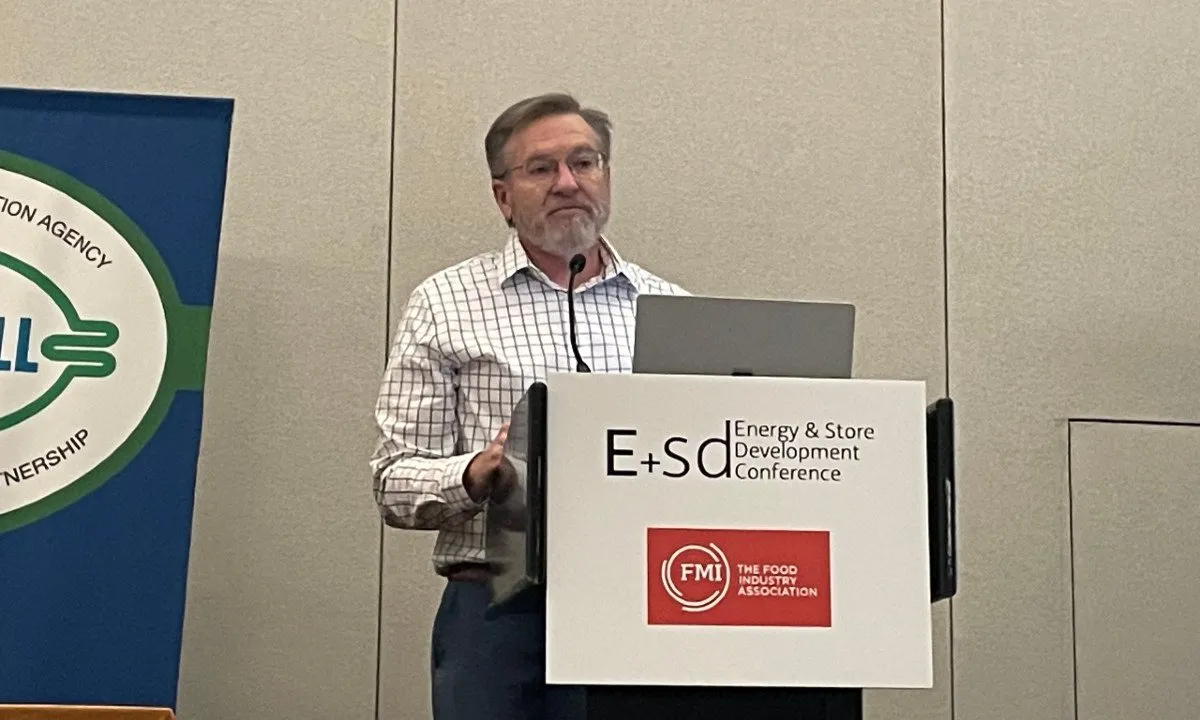
One of the concerns raised at the recent FMI (the Food Industry Association) Energy & Store Development Conference was the fact that the proposed rule was announced so close to the January 1, 2026, launch of some of the provisions in the original rule. In a separate webinar following the EPA hearing on October 20, Bruce Hierlmeier, Director of Regulatory Compliance at transcritical CO2 system provider Zero Zone, also addressed this concern.
“We may not know anything about what the new rule is for a month, two months [after January 1],” Hierlmeier said. “What are they going to do in between?” Zero Zone is hoping that the EPA announces in the next month or two that it won’t enforce the original rule before a new one is published, he added.
Some manufacturers interviewed at the FMI Energy & Store Development Conference said they didn’t believe the reconsideration of the Technology Transitions rule would hamper interest in CO2 systems. “We are seeing phenomenal CO2 sales growth, and we don’t see that changing for our clients,” said Michael Lehtinen, Senior Product Leader, CO2 solutions for Hussmann.
“R744 gas sales [in 2025] are up 50%,” said Dave Garner, Regional Manager for Roberts Oxygen at the FMI conference, adding that he does not see any rollback by the EPA affecting sales of the gas. And Tommaso Scavone, Senior Sales Manager for LU-VE US, said that the company is adding a 220,000ft2 (20,440m2) facility to its existing 70,000ft2 (6,500m2) operation in Texas to keep up with the demand for CO2 outdoor gas coolers.
Trade groups weigh in
Numerous trade organizations weighed in at the hearing, mostly objecting to the delays in the Technology Transitions rule implementation dates and the allowance of higher GWP values for refrigerants in the interim.
Samantha Slater, Vice President of Government Affairs for the Air-Conditioning, Heating, and Refrigeration Institute (AHRI), urged the EPA to maintain the Technology Transitions rule’s transition schedule finalized in 2023. That schedule “rests on years of technical collaboration, product development and capital investment to strengthen U.S. competitiveness” and “provides the time needed to design, test, certify and scale new equipment,” she said, adding, “Changing the schedule now would disrupt planning and inject uncertainty across the market.”
Gary Schrift, President of the International Institute of All-Natural Refrigeration (IIAR), repeated a message he conveyed in a letter to the EPA in June: the EPA should retain the 150 GWP limit for refrigerants in most new cold-storage applications and not allow an interim 700 GWP limit.
“Allowing 700 GWP refrigerants [in industrial systems] would not reduce cost; they could actually disrupt the market,” he said. For example, using a refrigerant like R513A (100-year GWP 673, per IPCC AR6), which incorporates R134a, would drive up costs and reduce availability for other systems that rely on R134a, he explained. Ammonia, with zero GWP and zero ODP, is already used in over 90% of U.S. cold storage facilities, he added.
. “With known uncertainties around PFAS and safer non-PFAS refrigerants like ammonia readily available, we believe it’s unnecessary to add this risk.”
Gary Schrift, IIAR
Moreover, Schrift noted, R513A consists of two PFAS (per- and polyfluoralkyl substances) refrigerants, R134a and R1234yf, which degrade in the atmosphere into trifluoroacetic acid (TFA), another PFAS. “With known uncertainties around PFAS and safer non-PFAS refrigerants like ammonia readily available, we believe it’s unnecessary to add this risk,” he said. Tom Wolgamot, Principal Engineer at DC Engineering, observed at the FMI conference that “there is a hesitancy by end users to go too deep into HFOs because of the potential for regulations in the U.S. for PFAS like in Europe.”
However, Stephanie Harris, Chief Regulatory Officer and General Counsel for FMI, which largely represents supermarkets, reiterated the organization’s support for the delays in the proposed Technology Transitions rule. “The proposed reconsideration is a critical step forward by providing the additional time necessary for the grocery industry to transition its cooling systems to new technologies,” she said, adding that the current deadlines “would result in exorbitant compliance costs as a result of the current barriers for HFC alternative refrigerants and very few HFC alternative technologies.”
Charlie Lowe, Director of Refrigeration and Maintenance Services at K-VA-T Food Stores, echoed Harris’s sentiments at the FMI conference, saying, “Retailers want to get to natural refrigerants, but they don’t want to financially strain consumers more than they already are with higher prices. The EPA proposed rollback is a good thing.”
One change to the Technology Transitions rule that received general support in the HVAC sector was removing the January 1, 2026, installation deadline for residential and light-commercial air-conditioning and heat pump systems manufactured or imported before January 1, 2025. “The remaining R410a [HVAC] equipment is a major issue for distributors across the country who are facing that January 1, 2026, installation [deadline],” said Alex Ayers, Vice President of Government Affairs for HARDI (Heating, Air-conditioning & Refrigeration Distributors International)
Michael Garry is the U.S-based Editor-at-Large for ATMOsphere, where he has worked since 2014. He was previously Editor-in-Chief of ATMOsphere’s NaturalRefrigerants.com website. He has covered natural refrigerants since 2006.
Jae Haroldsen contributed reporting from the 2025 FMI Energy & Store Development Conference for this article..