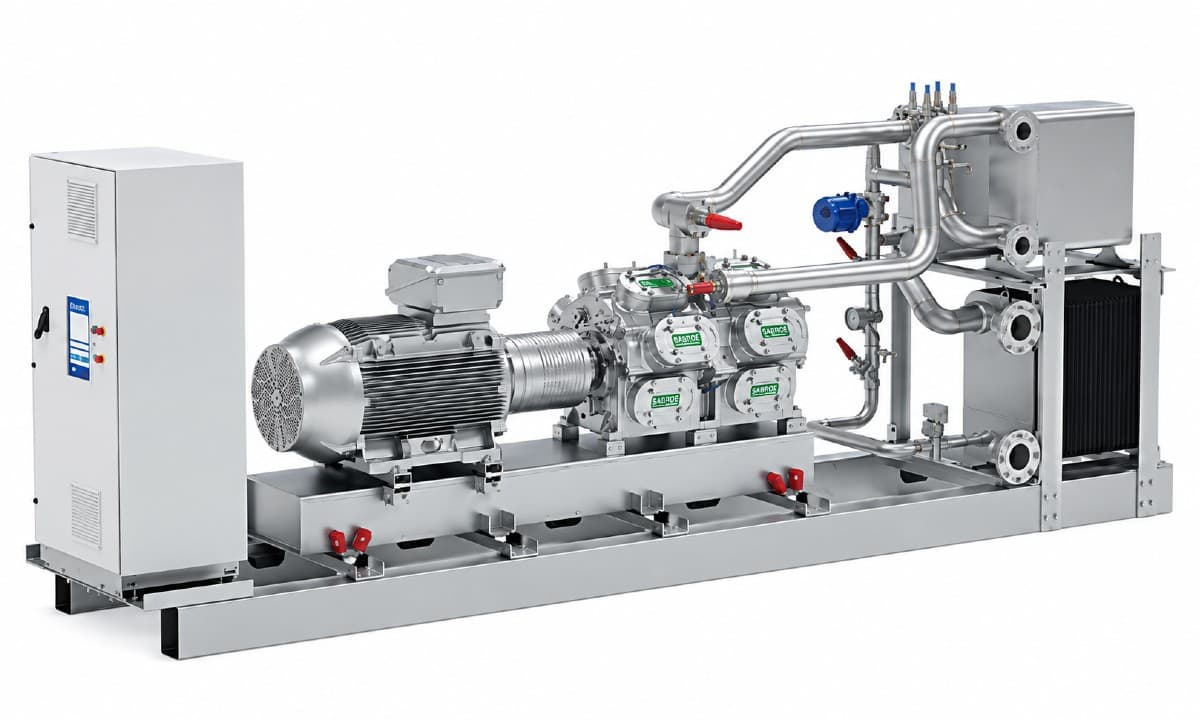
Helen, a Finnish energy company, has announced it is building a new district heating plant in Helsinki that will feature a large-scale air-to-water CO2 (R744) heat pump with a heating capacity of between 20–30MW (5,686–8,530TR), depending on the outdoor air temperature.
“The heat pump plant will be the first of its size in the world, and one of its significant advantages is that it can be operated in outdoor temperatures as low as −20°C [−4°F],” said Juhani Aaltonen, VP of Green Investments at Helen. “The heating plant complex will significantly reduce the CO2 [heating] emissions in Helsinki and bring us closer to the carbon-neutrality goal. In addition, the plant is likely to create price stability for customers as its production is easily adjustable.”
NaturalRefrigerants.com has reached out to Helen for more information on the CO2 heat pump.
The new facility: Helen’s new district heating plant will be built in Helsinki’s Patola neighborhood and will also feature an electric boiler plant utilizing two 50MW (14,217TR) electric boilers.
- Helen estimates the district heating plant’s CO2 heat pump will produce more than 200GWh of heat annually and will reduce heating-related emissions by 26,000 metric tons per year.
- The electric boiler plant will produce 300GWh of heat annually and reduce heating-related emissions by 30,000 metric tons per year.
- Construction will begin at the end of 2024, and the facility is expected to come online in winter 2026.
Government support: According to Helen, Finland’s Ministry of Economic Affairs and Employment provided an energy subsidy for the new heat pump plant. NaturalRefrigerants.com has reached out to Helen to learn about the specifics of the subsidy.
- In December 2022, the Ministry of Economic Affairs and Employment announced that Helen had been granted €14.53 million ($15.4 million) in funding for a heat pump plant in southern Helsinki, with that heat pump using R1234ze as a refrigerant.
A growing trend: District heating plants using natural refrigerant heat pumps are becoming more common throughout Europe.
- Germany-based OEM MAN Energy Solutions has supplied four 44MW (12,511TR) CO2 water-to-water heat pumps to the city of Aalborg, Denmark, to retrofit one of its district heating plants. The retrofitted facility, which currently uses coal to provide heating, will have a heating capacity of 132MW (37,533TR) and is slated to begin operations in 2027.
- A 7MW (1,990TR) CO2 air-to-water heat pump from Fenagy recently joined the district heating network in the city of Løsning, Denmark. The Danish OEM needed just nine months to build, install and commission the heat pump.
- Earlier in 2024, Lemgo, Germany, installed two GEA ammonia (R717) heat pumps to decarbonize the district heating network of its old town, one using waste heat from the city’s combined heat and power plant as a heat source and the other heat from the city’s treated wastewater.
What it means for NatRefs: Nearly all of Helsinki’s apartments are covered by district heating, according to Helen, and the company’s goal is to achieve 100% carbon neutrality in energy production by 2030. This presents a clear opportunity for the increased use of natural refrigerant heat pumps, especially given their capabilities in colder climates.
- The mean winter temperature in Finland is below 0°C (32°F) in the winter. In Helsinki, the temperature on Christmas Eve is typically −2°C (28.4°F) with a high of 2°C (35.6°F).