Launching one new product a month in any industry is challenging, especially in HVAC&R. However, that’s the challenge Enex Technologies has set for itself, and Product Management Director Massimiliano Sfragara spoke with NaturalRefrigerants.com about how his team works to ensure the company can reach its ambitious goal.
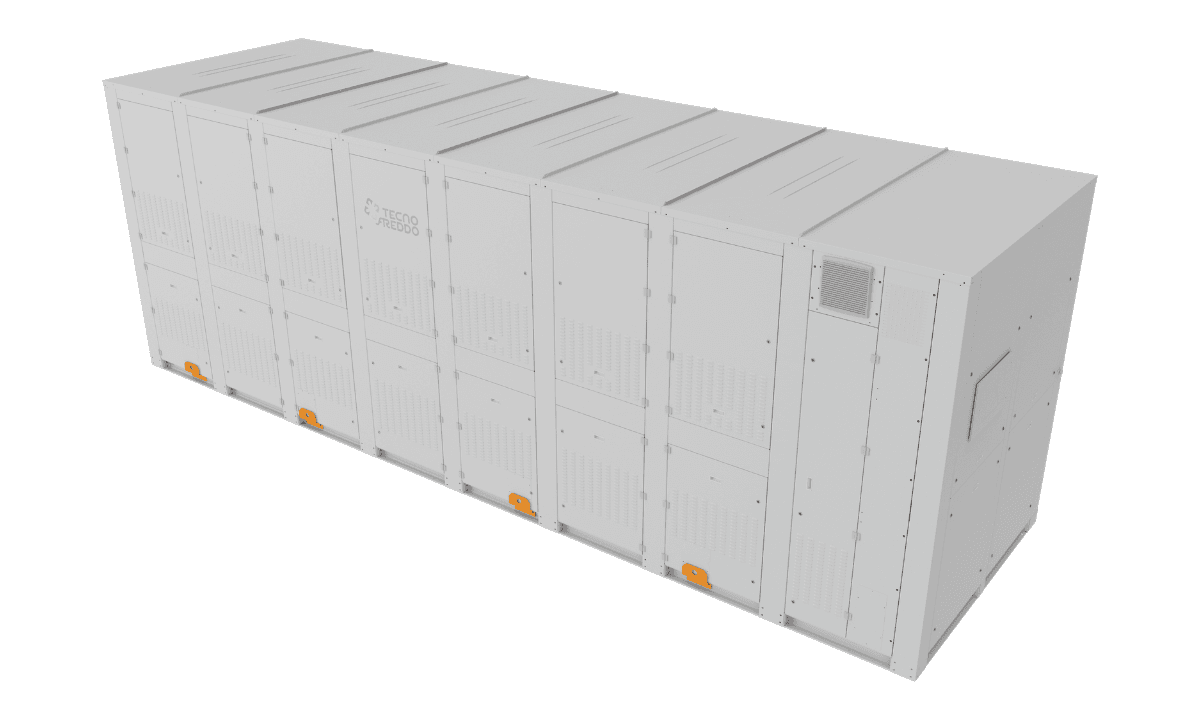
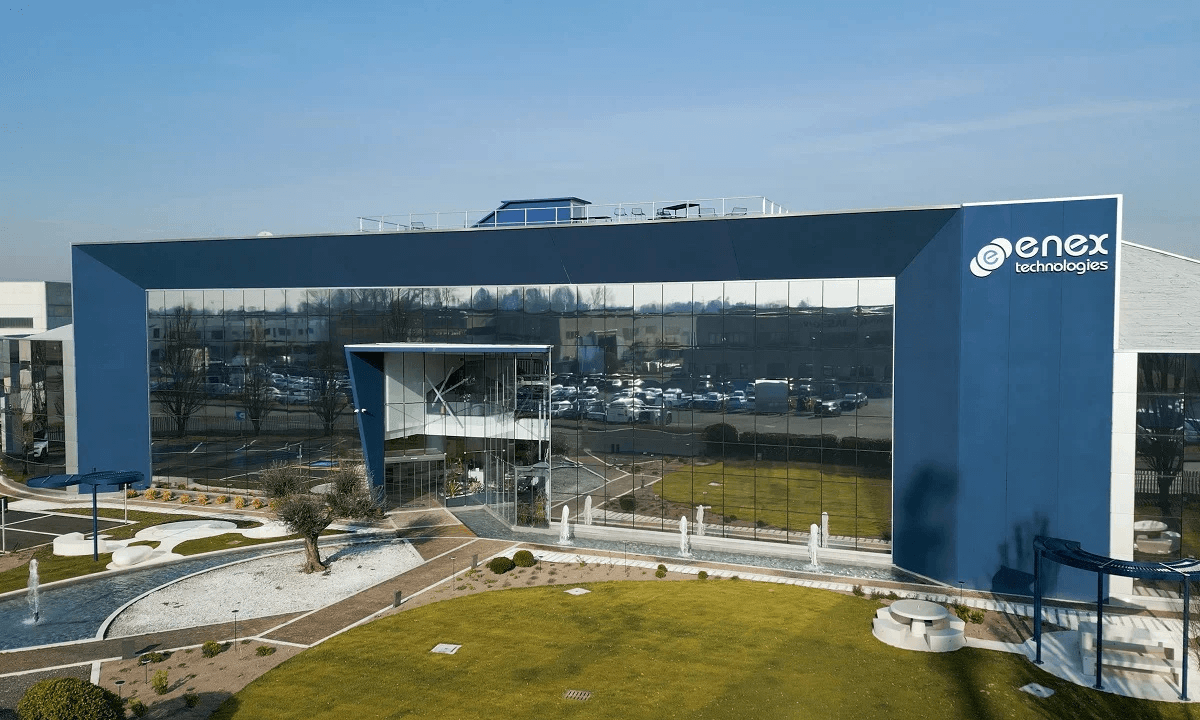
Enex designs and manufactures refrigeration systems, heat pumps and chillers using natural refrigerants, including ammonia (R717), CO2 (R744), propane (R290) and water (R718). Last month it announced an R290 indirect chiller/heat pump system offering a cooling capacity of up to 1MW (284.3TR) for food storage and processing.
Sfragara said Enex’s goal is to “accelerate the transition to natural refrigerants and high-efficiency solutions,” and in addition to developing new technologies, that pursuit is also leading the company to new markets.
“The increasing global restrictions on synthetic refrigerants are pushing the market, and our innovation efforts, toward CO2, R290, ammonia and other low-GWP natural alternatives,” Sfragara said. “Although our core focus remains Europe, we are actively expanding our presence in the emerging markets of Australia, Southeast Asia and South America.”
Sfragara spoke with NaturalRefrigerants.com about how the Enex product team’s fast-paced product development process, the trends in natural refrigerants they’re watching and the new products they’re working on.
The interview has been edited for length and clarity.
How does Enex prioritize products for development, and how long does it take to develop a new product?
Massimiliano Sfragara: First and foremost our focus is on market needs and customer demand. If a product addresses a real need, offers a significant environmental impact and presents a strong market opportunity, it moves higher on our roadmap.
At the same time, time-to-market is a crucial factor. Some products, particularly those based on existing ranges or technologies, can be developed and launched more rapidly. Finally we consider technical feasibility and our strategic alignment to eliminate synthetic refrigerants and reduce emissions.
Our new product development varies from a few weeks to several months, depending on the complexity and whether it is a new solution or an evolution of an existing one. Behind every launch is a dedicated, cross-functional team bringing together expertise from R&D, engineering, marketing, procurement, service, manufacturing and sales that brings the contact with the customer to ensure alignment from concept to market readiness.
What natural refrigerant trends is Enex’s product development team keeping an eye on?
MS: Trends we’re following include over-1MW CO2 transcritical systems, large heat pumps for industrial and district heating applications, reduced water consumption adiabatic cooling, low–charge ammonia chillers and low–charge R290 modular systems.
We are also interested in integrated systems for sustainable high-performance solutions, where refrigeration, heating and air–conditioning are combined into unified, efficient all-in-one systems, with natural refrigerants throughout the design.
“We are planning to launch an ammonia-based industrial chiller in the coming months, which will strengthen our position and reinforce our commitment to industrial applications.”
Massimiliano Sfragara
Product Management Director at Enex Technologies
Enex recently announced a new R290 product for the food-processing companies. Is Enex developing other products for the industrial sector?
MS: The recent introduction of our R290 indirect system marks the beginning of our efforts in this space. We are planning to launch an ammonia-based industrial chiller in the coming months, which will strengthen our position and reinforce our commitment to industrial applications.
Does Enex have any natural refrigerant products in R&D for data center applications?
MS: Many of our ongoing projects across refrigeration, HVAC and ventilated units are designed with potential applications in data center environments. For instance, during the 2024 DCN [Data Center Nation] event in Milan, we showcased a simulation demonstrating that ammonia chillers have the lowest annual energy consumption among solutions tested.
Beyond chillers, we are also exploring natural refrigerant dry coolers, cooling towers and close control units using chilled water to meet sector-specific efficiency and sustainability goals.