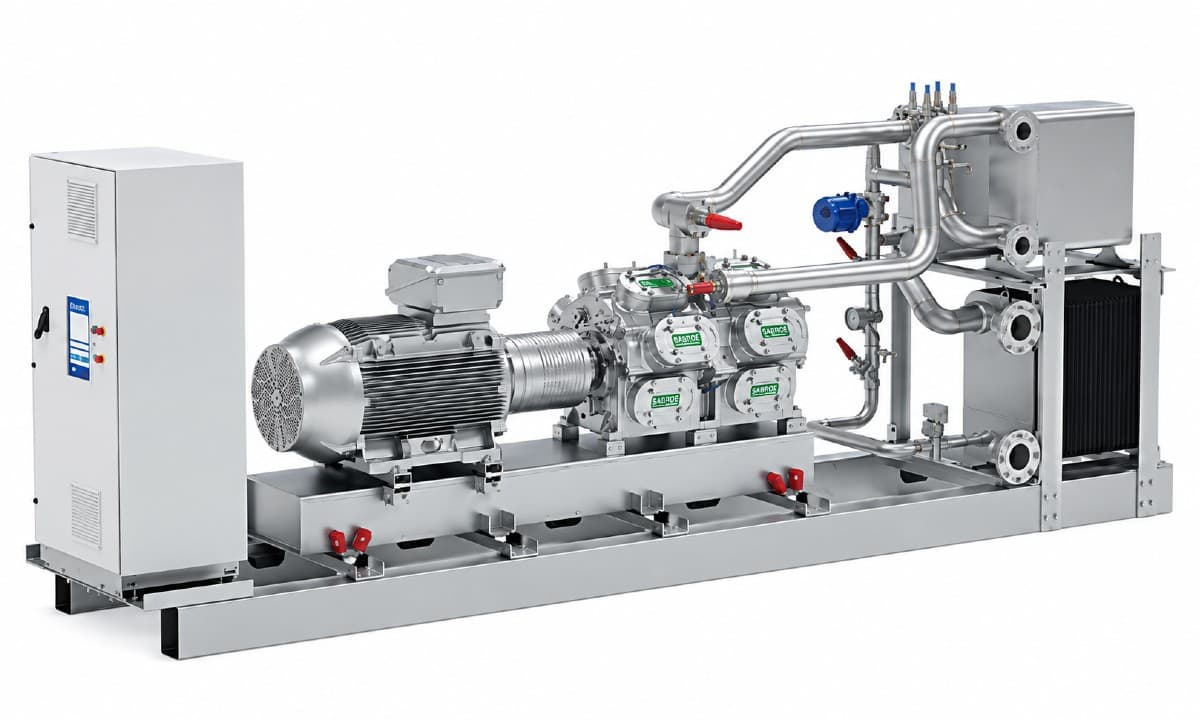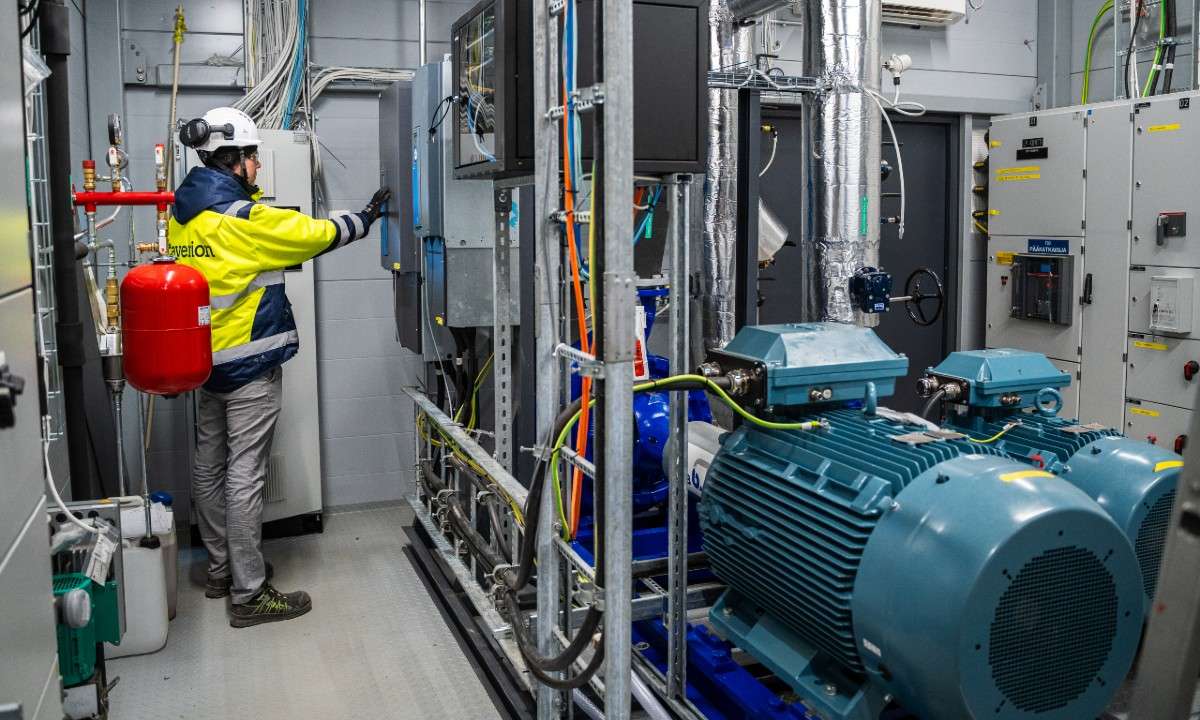
Finnish contractor Caverion is commissioning two hydrocarbon heat pump modules in Kajaani, representing 12MW (3,412TR) of a planned 30MW (8,5230TR) system. The units, manufactured by Fenagy, support the city’s district heating network using data center waste heat.
By the end of May, the Kajaani district heating plant, owned by energy provider Loiste Lämpö, will begin supplying heat to the network from the first commissioned modules. Three other modules, representing a total heating capacity of 18MW (5,118TR), will be completed and commissioned in 2027. Each heat pump contains three compressors: two using isobutane (R600a) and one using propane (R290), according to Fenagy.
“Data centers are a good source of heat as they produce stable thermal energy year-round,” Caverion said. “The waste heat generated by the Kajaani data centers is expected to cover more than 80% of the region’s annual district heating demand.”
Additional details: As part of Kajaani’s data center retrofit expansion, the heat pumps will also provide 20°C (68°F) water for server cooling, independent of the district heating network return temperature, according to Fenagy.
- “The heat pumps will raise the roughly 30°C [86°F] data center excess heat to approximately 85°C [185°F] to meet the district heating requirements,” Fenagy said, with an expected heating COP of 4.2–5.
- The initial two-module installation covers a footprint of roughly 600m2 (6,460ft2), according to Caverion, with the plant designed to scale in line with waste heat available in future data center expansions.
- The facility’s original synthetic chillers and dry coolers will remain in place to provide additional redundancy and cover cooling demand during periods of reduced heating demand.
Best COPs: “Industrial heat pumps that use natural refrigerants are the most efficient way to raise waste heat to the temperature level required by district heating networks,” Caverion said, citing isobutane, propane and ammonia (R717).
- A 4.9MW (1,393TR) district heating system in Seinäjoki, designed by Caverion, uses three Johnson Controls Sabroe DualPAC ammonia heat pumps to supply heat to roughly 2,000 single-family homes, drawing heat from a local wastewater treatment plant.
Long-term planning: German stakeholders at Tech Show Frankfurt 2026, held May 6‒7, discussed decarbonizing district heating using data center waste heat. Among the panelists were Mainz energy provider KMW and Offenbach utility EVO, both of which have experience integrating data centers into district heating networks.
- The panel emphasised that successful projects rely on early municipal planning that aligns power, heat and zoning.
- KMW is building three data centers with a combined IT power capacity of 54MW at an existing energy plant. The site currently produces district heating via gas-fired power plants. However, the new data centers, cooled using water from the Rhine River, will also be able to supply district heating when surplus wind power is available, according to Markus Blüm, Managing Director of Green Mountain KMW Data Center.
- EVO has “signed contracts with several data center operators,” according to CEO Christoph Meier. “The city makes certain ‘green’ requirements, and then we have to find technical solutions that include space for the data center and the heat pump,” he said.
Quotable: “Investing in a heat pump plant is a concrete step toward reducing greenhouse gas emissions,” said Marko Saviniemi, Head of Heat Business at Loiste Lämpö. “Waste heat from the data center, utilized through heat pumps, not only reduces emissions but also diversifies local heat production for the benefit of everyone.”
“Waste heat from the data center, utilized through heat pumps, not only reduces emissions but also diversifies local heat production for the benefit of everyone.”
Marko Saviniemi, Head of Heat Business at Loiste Lämpö