<span data-mce-type="bookmark" style="display: inline-block; width: 0px; overflow: hidden; line-height: 0;" class="mce_SELRES_start"></span>
Contractors have been touted as one of the reasons why EU policymakers should proceed cautiously with regulating f-gases and PFAS (per- and polyfluoroalkyl substances).
Regarding the recently revised EU F-gas Regulation, there were questions about whether contractors would be able to install and service natural refrigerant-based equipment once f-gas alternatives were phased out. The PFAS restriction proposal, currently under review by the European Chemicals Agency (ECHA), is said to pose a threat to contractors due to supply chain disruptions.
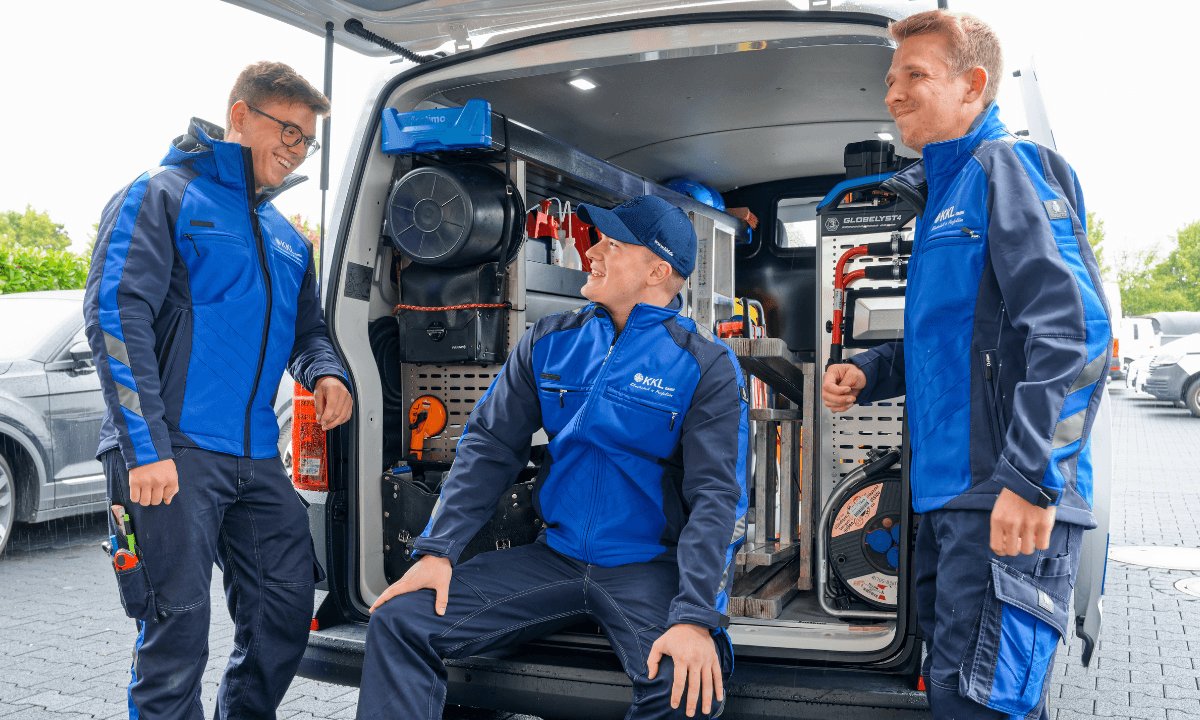
While some contractors do lack experience working with natural refrigerants and are concerned about the negative impacts of a PFAS refrigerant ban, Düsseldorf-based KKL proves these concerns aren’t universal. KKL was founded nearly 40 years ago and has grown to more than 300 employees and expanded beyond Düsseldorf into Cologne and Stuttgart.
The company has a long history of working with natural refrigerants and makes it a point of emphasis to train employees on systems using naturals. Regarding PFAS, CEO Patrick Peters told NaturalRefrigerants.com that he sees a potential regulation not as a threat but as an “opportunity.”
“The PFAS discussion will change our industry – and it offers the opportunity to accelerate the transition to natural refrigerants and thus take the next step toward more sustainable refrigeration and air-conditioning technology,” Peters said.
KKL is not alone in these beliefs. The company recently joined bluu unit, an alliance of 23 HVAC&R contractors focused on natural refrigerants that was established by the European private equity firm Triton Partners. Peters spoke with NaturalRefrigerants.com about KKL’s work, joining bluu unit and how the company has positioned itself to stay ahead of the industry.
This interview has been edited for length and clarity.
Why did KKL decide to join bluu unit?
Patrick Peters: It quickly became clear to everyone that KKL is a perfect fit for bluu unit in terms of expertise, culture and people. For me this alliance is much more than a business decision, though. It is the dawn of a new era in refrigeration and air-conditioning technology.
I see this as a huge opportunity – not only for KKL but for the entire industry. There has never been a group of this size and expertise in refrigeration and air-conditioning technology in Germany before. The merger allows us to pool our enormous know-how, create synergies and offer our customers a service network that is unique in this form.
This is particularly important in the context of the energy transition. We are faced with designing energy-efficient and sustainable buildings, data centers and industrial facilities, and this requires strong partners who pool their knowledge and take joint responsibility.
Bluu unit is unique in Europe, and I am convinced that we are not only setting standards but also making a real contribution to the sustainable future of our industry.
One of the things that makes bluu unit unique is its focus on natural refrigerants. What experience with natural refrigerants does KKL bring to bluu unit and vice versa?
PP: We started actively using these technologies early on, particularly propane solutions in conjunction with water-based systems. In recent years, we’ve successfully implemented several large projects, including data centers fully equipped with natural refrigerants. This shows that these technologies have long been practical and economically viable. Through our collaboration in bluu unit, we benefit from a strong network of companies with similar experiences in other applications and technologies.
“Natural refrigerants are the logical and sustainable answer to many of the questions that PFAS regulation poses today.”
Patrick Peters, CEO of KKL
Can you elaborate on KKL’s training capabilities and what role they play in making the shift to natural refrigerants?
PP: A central component of our work is our training academy. There we provide trainees and employees with practical training on modern equipment, including systems based on natural refrigerants. We create an environment in which theory and practice are directly linked. This depth of training is crucial to actively shaping change in our industry.
We don’t just want to talk about sustainability. We want to live it. The academy is the foundation on which our innovative strength and quality standards are built.
KKL has done extensive work on data centers, the fastest-growing segment of the HVAC&R industry. What has this consisted of?
PP: We have undergone tremendous development in the field of data centers in recent years, and today KKL is one of Germany’s pioneers in sustainable cooling solutions. We are particularly proud at having equipped several data centers entirely with natural refrigerants, such as propane. Our goal is to harmonize technology, sustainability and economic efficiency.
To this end, we rely on energy-efficient, modular systems with intelligent control technology. For us, innovation means not only using new technologies but combining them in such a way that they create long-term added value.
What is your view on the outlook of the HVAC&R sector in Germany?
PP: I am extremely optimistic about the future of our industry even though we face major challenges. Demand for energy-efficient refrigeration and air-conditioning is growing steadily, and simultaneously there is a growing awareness of sustainability and the responsible use of energy and resources. This opens up enormous opportunities for companies that combine innovation with responsibility.
I am convinced that Germany can play a pioneering role in Europe in the field of refrigeration and air-conditioning technology if we continue to invest boldly, train skilled workers and actively shape change. Bluu unit is creating precisely this network of strong companies that want to make a difference together.
What’s your take on the potential European PFAS regulation? How would this impact the industry?
PP: The topic of PFAS is currently affecting the entire industry, and rightly so. We are at a point where regulation, sustainability and technological innovation are directly linked. Many materials and components used to date will have to be rethought in the future. I see this development as an important impetus to break new ground.
It forces us to question existing technologies and develop solutions that are more sustainable, transparent and secure in the long term. This is exactly where natural refrigerants come into play. They are the logical and sustainable answer to many of the questions that PFAS regulation poses today.
At KKL and within Bluu unit, we are working intensively to further advance these alternatives. We rely on natural refrigerants because they are not only environmentally friendly but also offer long-term planning security and technical stability.