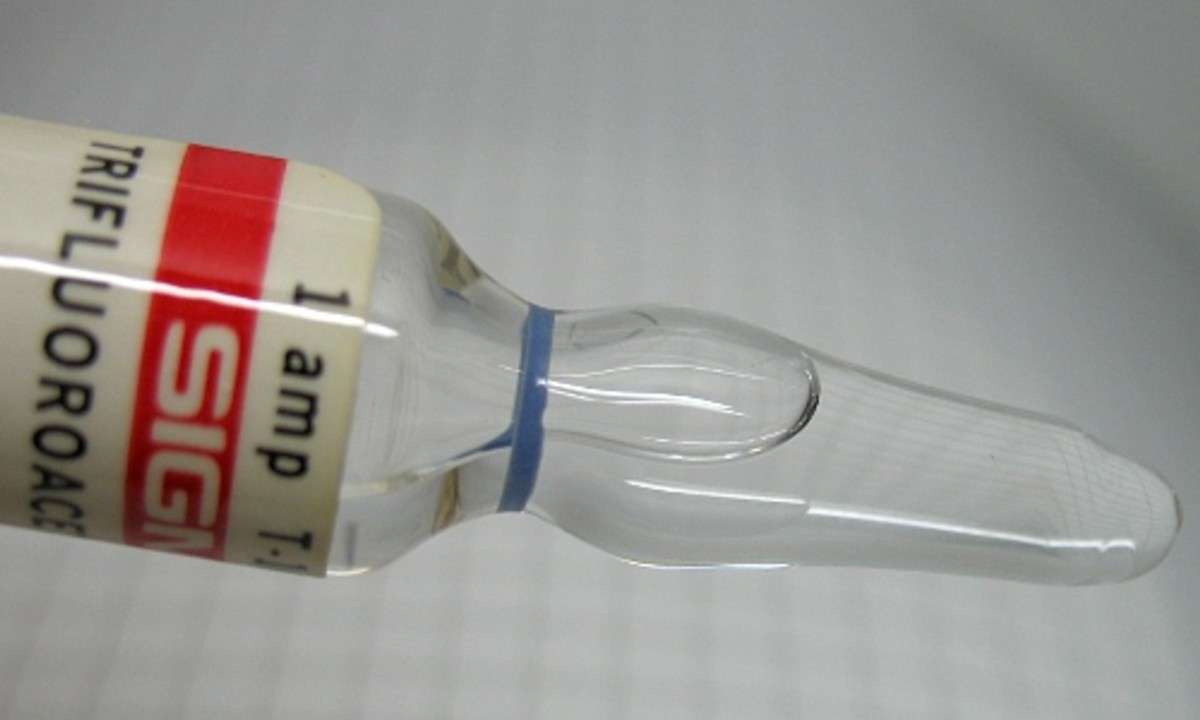
The Pesticide Action Network (PAN) Europe, a Brussels-based NGO, has released a report that challenges industry interpretations of animal studies looking at the toxicity of trifluoroacetic acid (TFA), a byproduct of some f-gases, pesticides and other chemicals.
The report, “Manufacturing Doubt: How the Industry Downplays TFA’s Toxicity,” is based on PAN Europe’s analysis of chemical manufacturer-supported studies “to watchdog whether the industry would attempt to cast doubt on the toxicity of the substance in order to secure weaker regulation of TFA and TFA‑emitting chemicals.”
Authors of the report at PAN Europe include environmental scientist and toxicologist Angeliki Lysimachou, Head of Science and Policy; Hans Muilerman, Chemicals Officer; and Salomé Roynel, Policy Officer on Pesticide Risk Assessment. PAN Europe has also published Europe-focused studies on TFA in surface and drinking water, wine and bread/cereal products.
In its report, PAN Europe targets chemical companies that have supported TFA animal studies individually or together in a “TFA Task Force.” These include pesticide manufacturers BASF, Bayer, Corteva and Syngenta, TFA producer Solvay and f-gas producers Chemours and Honeywell.
In March, the EU banned the TFA-producing pesticide flufenacet while in July Denmark banned eight pesticides that can form TFA; PAN Europe calls for all TFA-producing pesticides to be banned. Solvay announced in September that it would cease production of TFA and its derivatives by early 2026.
While environmental TFA has multiple sources, a 2022 report by the German Environment Agency (UBA) estimated that emissions of certain refrigerants like HFO-1234yf and blowing agents – due to their breakdown in the atmosphere – were the largest annual source of TFA in Germany, producing about 2,000 metric tons. This is followed by the breakdown of pesticides at about 457 metric tons of TFA and pharmaceuticals at about 29 metric tons; additional TFA sources include wastewater and landfills, industrial releases and the breakdown of fluorinated polymers.
The proliferation of TFA in the environment has been widely studied, raising concerns about its impact on human health, compounded by the fact that TFA is costly and energy intensive to remove from water.
According to PAN Europe, for decades chemical companies “selectively framed data, avoided conducting critical long-term studies until legally compelled and advanced speculative arguments to downplay adverse effects” of TFA. In addition, they proposed a TFA drinking water limit of 294 mcg/L that is more than 100 times higher than the most protective national standard in Europe (the Netherlands’ 2.2mcg/L) and “disregards the protection of vulnerable groups, including babies and children,” said the NGO.
While animal studies are not determinative of human toxicity, “the precautionary principle must apply,” said PAN Europe. “The persistence, mobility, and toxicity of TFA mean that waiting for further proof will only deepen irreversible contamination. Regulatory decisions should reflect worst-case exposure scenarios and explicitly protect vulnerable populations.”
The NGO also argued that “strong rules are needed to ensure that risk assessments are independent from industry influence, both at the EU and Member State level,” adding, “Transparency, rigorous standards, and independent scientific expertise are essential to avoid regulatory capture, biased assessments, and the prioritization of corporate interests over public health.”
“Strong rules are needed to ensure that risk assessments are independent from industry influence, both at the EU and Member State level.”
PAN Europe
The PAN Europe reports “highlights the concern that certain actors are downplaying evidence and open questions about TFA’s harmful effects,” said Hans Peter Arp, Environmental Chemist and Technical Expert at the Norwegian Geotechnical Institute and Professor at the Norwegian University of Science and Technology. “Even more troubling is their opposition to the use of the precautionary principle, despite the increasing number of alarm bells – manifested in growing indications of TFA toxicity, rising exposure levels among the general population at an unprecedented rate and the impossibility to remove this substance from the environment in a way that lowers exposure. Each day we are ingesting more TFA than we are eliminating, and we have very limited data on chronic, lifelong exposure.”
“We must no longer tolerate the manufacturing of doubt,” added Arp. “Instead we should apply the precautionary principle by taking all feasible steps to limit TFA emissions while simultaneously collecting the data needed to prevent risks from spiraling out of control. This is especially critical because TFA represents an intergenerational issue. The decisions we make today will affect the potential risks faced by future generations.” Arp is the lead author of a 2024 study that characterized TFA as a “planetary boundary threat.”
Turning point in 2017
The PAN Europe report tracked the evolution of TFA studies, which began in the 1980s, and recent regulatory responses. A turning point did not come until 2017 when the European Chemicals Agency (ECHA) requested chemical producers to carry out and deliver two long-term toxicity studies on TFA; the first was done by Solvay and Bayer and the second by the TFA Task Force at the time (excluding Corteva, Chemours and Honeywell).
These studies, beginning in 2021, showed that TFA could harm rabbits and rabbit offspring, notably with eye and skeletal abnormalities in offspring, triggering several regulatory responses. Germany formally proposed in 2025 that TFA and its trifluoroacetate salts be classified by ECHA as reproductively toxic, very persistent and very mobile under the EU’s Classification, Labelling and Packaging (CLP) Regulation.
TFA, many f-gases and pesticides fall under the scientifically endorsed definition of per- and polyfluoroalkyl substances (PFAS), a broad category of chemical pollutants known as forever chemicals. Using this definition, ECHA has since 2023 been evaluating a “universal PFAS restriction proposal” from the national authorities of Denmark, Germany, the Netherlands, Norway and Sweden to restrict PFAS as a class.
Furthermore, the European Commission has asked the European Food Safety Authority (EFSA) to review the recommended toxicological reference values – acceptable daily intake (ADI) and acute reference dose per day (ARfD) – for TFA. EFSA is currently proposing an ADI at 0.03mg/kg bw (body weight) and an ARfD of 0.6mg/kg bw (both based on sodium trifluoroacetate) and is expected to announce its conclusion next February. (EFSA’s original ADI of 0.05mg/kg bw was set in 2014.) Meanwhile, the EU has provisionally added TFA to its list of priority contaminants in surface and groundwater.
Evidence that TFA could cause reproductive toxicity has already led the Commission to conclude this year that it is a “toxicologically relevant” metabolite of PFAS pesticides, restricting its lawful concentration in groundwater to no more than 0.1mcg/L, a level already exceeded in many areas in Europe.
In assessing the two rabbit studies, PAN Europe said they provided “clear and consistent evidence of serious [fetal] abnormalities, affecting both soft tissues (eyes) and skeletal structures.” The NGO noted that the TFA Task Force proposed a no-observed-adverse-effect-level (NOAEL) of 60mg/kg/day, “even though liver toxicity [in mother rabbits] was already evident at that dose.” Moreover, at 30mg/kg/day, altered blood chemistry was observed in the mother rabbits, “indicating systemic effects and suggesting that the NOAEL should be set even lower,” said PAN Europe.
PAN Europe said that in the second rabbit study TFA levels in the feed and water of the exposed animals were not taken into account. While TFA contamination was detected in the control group (up to 0.626mg/L in the female rabbits), “this was not considered in the study conclusions, which could explain some of the skeletal malformations seen in this group,” the NGO said, adding that this could “potentially [mask] effects at low doses and [suggest] that the true NOAEL could be lower than reported.”
Rat studies
In addition to rabbits, rats have been the focus of several TFA toxicity studies. In an extended one-generation study of rats in 2021, Solvay and Bayer claimed no adverse
reproductive effects from TFA exposure. However, said PAN Europe, “a closer look reveals overlooked signs of harm in offspring, including reduced thyroid hormone levels, [changed] weight of reproductive organs (testes and epididymis), liver changes, blood biochemistry alterations, and sperm abnormalities, even at lower exposures.”
Some limited data in the extended one-generation study were given for female and male rat offspring of 13 weeks at high exposure, where eye malformations were reported in females. Skeletal malformations were not evaluated, and as a result comparisons could not be made to the rabbit studies where such effects were observed. “Despite these gaps and findings, the industry proposed an unrealistically high NOAEL of 250mg/kg/day,” said PAN Europe.
The chemical companies also attempted to downplay TFA-induced eye malformations toxicity by proposing a rabbit-specific mechanism tied to lactate transport disruption, said PAN Europe. But these malformations occurred at TFA levels below the proposed hypothetical threshold calculated to trigger such effects, “undermining their own argument,” said the NGO. Moreover, evidence from multiple rat studies, including data from Bayer, showed eye malformations in adult rats as well. “This suggests the eye is a general target organ, not limited to rabbits,” the NGO said.
“Rather than acknowledging a cross-species pattern, industry dismisses the rat findings by claiming the results fall within ‘historical control data ranges,’” added PAN Europe. “This deflection fails to address the consistency of effects across studies, reinforcing the conclusion that TFA’s toxicity is not species-specific.”
PAN Europe also critiqued the drinking water limit proposed by the TFA Task Force, which is far above that set by a number of European countries. Two countries, Denmark and Italy, have adopted binding TFA drinking water parameters, 9mcg/L and 10mcg/L, respectively. Other countries have set guideline values: the Netherlands (2.2mcg/L), Belgium/Wallonia (2.2), Luxembourg (12), Belgium/Flanders (16.5), France (60) and Germany (60). By contrast, the TFA Task Force has proposed a value of 294mcg/L, noted PAN Europe.
The Health and Environment Alliance (HEAL) recently published a review of PFAS protection measures in Europe, including those that pertain to TFA.
A 1984 study on pregnant mice mentioned in the PAN Europe report “deserves emphasis,” said Norwegian scientist Arp. It raised concerns about the anesthetic agent halothane, which metabolizes into TFA-protein molecules linked to hepatotoxic and neurotoxic effects. “This was one of the key reasons halothane was phased out of the market,” he noted. Other sectors “should take note of this precedent.”
Industry comments
NaturalRefrigerants.com reached out to chemical producers and trade groups for comment on the PAN Europe report. Syngenta, Corteva, Chemours, Honeywell, the TFA REACH Consortium and CropLife Europe did not respond. Angelica Candido, Sector Manager for Cefic (the European Chemical Industry Council) declined to comment, adding that “Cefic does not speak on behalf of individual companies.”
Leverkusen, Germany-based Bayer, manufacturer of pesticides that break down into TFA such as flufenacet (now banned in the EU), diflufenican and fluopyram, did comment. “Following the results of the latest scientific studies conducted on TFA, including relevant monitoring data, it is important to say that there is no indication for any risk from real-life TFA exposure for human health or the environment,” said Simone Kies, Senior Communications Manager for Bayer. “Such exposure also covers the potential TFA originating from the responsible use of our products. This also includes the consumption of drinking water in the EU, which is safe.”
“Even if the proposed new classification of TFA [as reproductively toxic] will be confirmed by the classification procedure of ECHA, we are not aware of any science-based conclusion that would change this assessment,” added Kies. “To be very clear: The toxicological data and the generic risk assessment on TFA submitted to regulators do not indicate any health risk for humans or wild mammals for the label-compliant use of our products.”
Brussels-based Solvay, which will cease its TFA production by early 2026, also commented. “Solvay strongly rejects the claim that the company deliberately delayed or distorted the risk assessment of TFA (trifluoroacetic acid),” said Peter Boelaert, External Communication Director. “This substance has been registered for many years under the European REACH regulation, based on assessments carried out by independent, recognized specialized bodies.”
“At the request of ECHA (European Chemicals Agency), Solvay conducted long-term toxicity studies, and has always provided the authorities with information on the intermediate results,” added Boelaert. “It is up to national and European regulatory authorities to proceed with an appropriate classification of TFA.”
Ludwigshafen, Germany-based BASF provided the following comments, via Holger Kapp in Corporate Media Relations:
- We understand the current concern and discussion about substances such as TFA and take this issue very seriously. We work closely with the regulatory authorities and provide all available relevant information to European and national authorities. During the EU review of pesticide active substances, TFA is thoroughly evaluated whenever identified as [a] major pesticide metabolite and is regulated under the approval system in place (Regulation EC 1107/2009).
- Each crop protection product is evaluated in many scientific studies during development and requires official approval before it can be marketed. All data obtained in the studies are collected and submitted to the regulatory authority. The authorities only grant approval when they conclude that the product can be used safely. In addition, after an initial registration, every authorization of crop protection products is regularly reviewed according to the latest state of science.
- We are actively in exchange with regulators and policymakers, for example via our industry associations like CropLife Europe on [the] regional and country level. We believe that the current regulatory system in place in the EU for evaluating plant protection products already has well-defined data and risk assessment requirements. They are explicitly designed to assess the environmental impact and safety of active substances on a case-by-case basis.
In past responses to concerns about TFA, the fluorochemical Industry has pointed to the UN Environment Programme (UNEP) and its 2022 Environmental Effects Assessment Panel (EEAP) report. The report says that TFA is not bioaccumulative, is “not expected to pose significant risk to humans or the environment at the present time” and “is unlikely to cause adverse effects out to 2100.” However, it added, “Monitoring of the environment for residues of TFA would provide an early warning if trends in concentration indicate rapid increases.” The EEAP report does not comment on the contribution of pesticides and other precursors to TFA since they don’t fall under the purview of the Montreal Protocol.
This article was updated with comments from BASF on October 15, 2025.