The New York State Division of the Budget, as part of its Capital Projects Appropriations Bill, announced on January 21 that it has proposed $750,000 (€717,000) for natural refrigeration projects.
Of the $750,000, $250,000 (€239,000) would be given to the Vermont Energy Investment Corporation (VEIC) for the deployment of natural refrigerants and greenhouse gas mitigation through research, demonstration projects, or outreach.” The remaining $500,000 (€478,000) would be allocated to the North American Sustainable Refrigeration Council (NASRC) “for the purpose of establishing a natural refrigeration demonstration project in a disadvantaged community.”
The proposed funding comes on the heels of the announcement on December 23, 2024, by the New York State Department of Environmental Conservation (DEC) that it has finalized updated regulations to reduce emissions of HFCs, including 20-year GWP limits of 10 for many new HVAC&R systems starting in 2034, thereby helping to foster the adoption of natural refrigerant-based applications. The new regulations amend 6 NYCRR Part 494, Hydrofluorocarbon Standards and Reporting, establishing GWP thresholds for refrigerants and requirements on equipment leakage.
“I’m focused on a parallel track to NASRC to help small and midsize businesses adopt natural refrigerants for commercial refrigeration.”
Tom Kacandes, VEIC
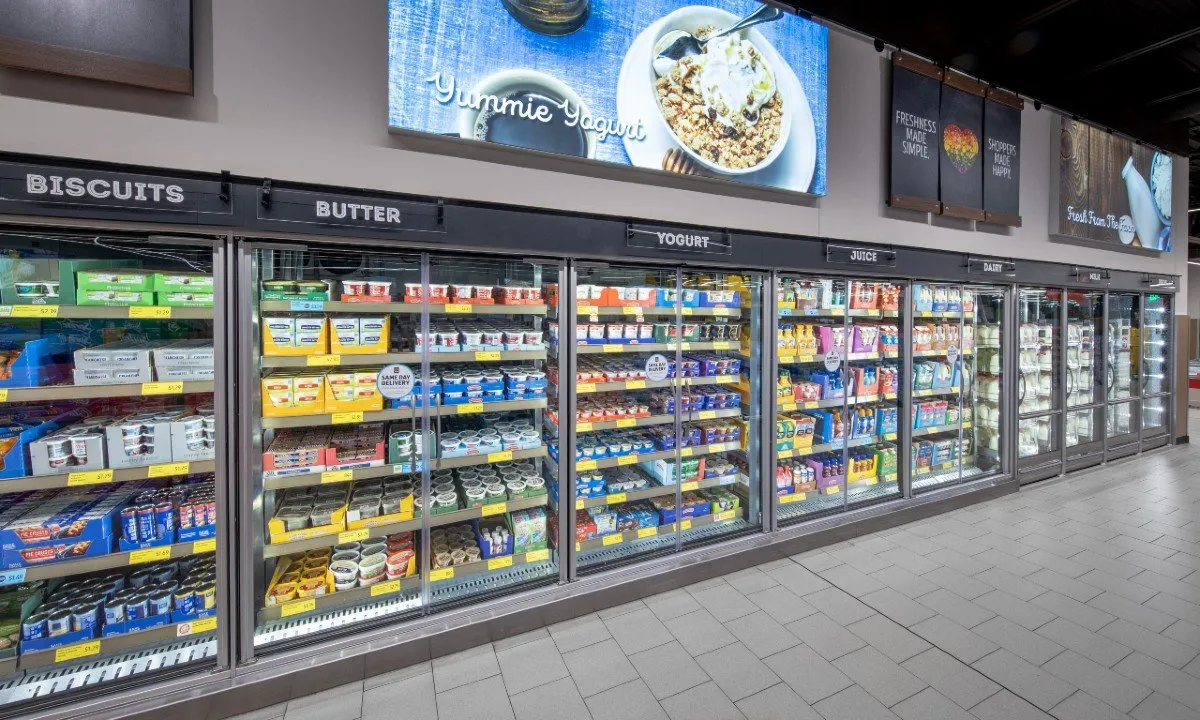
Last year, the NASRC partnered with the New York State Pollution Prevention Institute (NYSP2I) to demonstrate the use of CO2 (R744)-based refrigeration systems in disadvantaged communities as a replacement for HFC refrigerants. The projects, implemented at an ALDI US supermarket in Buffalo, New York, and a Walgreens drugstore in Islandia, New York, were supported by the New York State Environmental Protection Fund (EPF).
In June 2024, the DEC issued draft guidelines for $200 million (€191 million) of the $4.2-billion (€4-billion) Clean Water, Clean Air and Green Jobs Environmental Bond Act of 2022 to be aimed at helping businesses in disadvantaged communities adopt climate-friendly refrigerants, among other initiatives.
At a January 22 online meeting of New Yorkers for Cool Refrigerant Management, Tom Kacandes, a Senior Consultant for the VEIC, noted that the proposed $250,000 grant “is meant to be annual.” Kacandes confirmed that the budget language allows DEC to direct VEIC’s work as needed. “I’m focused on a parallel track to NASRC to help small and midsize businesses adopt natural refrigerants for commercial refrigeration,” he said.
Debate over reclaimed refrigerant
The new HFC regulations in New York, which began taking effect on January 1, have been criticized by the Heating, Air-Conditioning & Refrigeration Distributors International (HARDI). The criticism focuses on the launch in January 2025 of a regulation – based on a California regulation – prohibiting the use of bulk refrigerant with a GWP above 2,200. The California regulation, and by extension, the New York rule, allows reclaimed or recycled refrigerant above that GWP to be used to repair existing systems.
However, in an opinion piece in the Albany Times Union, HARDI CEO Talbot Gee argued that not enough high-GWP recycled refrigerant is available for the repair of supermarket refrigeration equipment. At least one refrigerant supplier countered that enough recycled R404A – the most commonly used high-GWP refrigerant in supermarket equipment – is available to meet the needs of grocers in New York and California.
HARDI has also stated that the New York regulations do not allow for the use of recycled refrigerant, though the DEC has been clear that the bulk refrigerant bans permit reclaimed refrigerant to be employed.
Tom Kacandes of VEIC corrected an earlier version of this article to indicate that the New York budget language allows DEC to direct VEIC’s work on natural refrigeration.