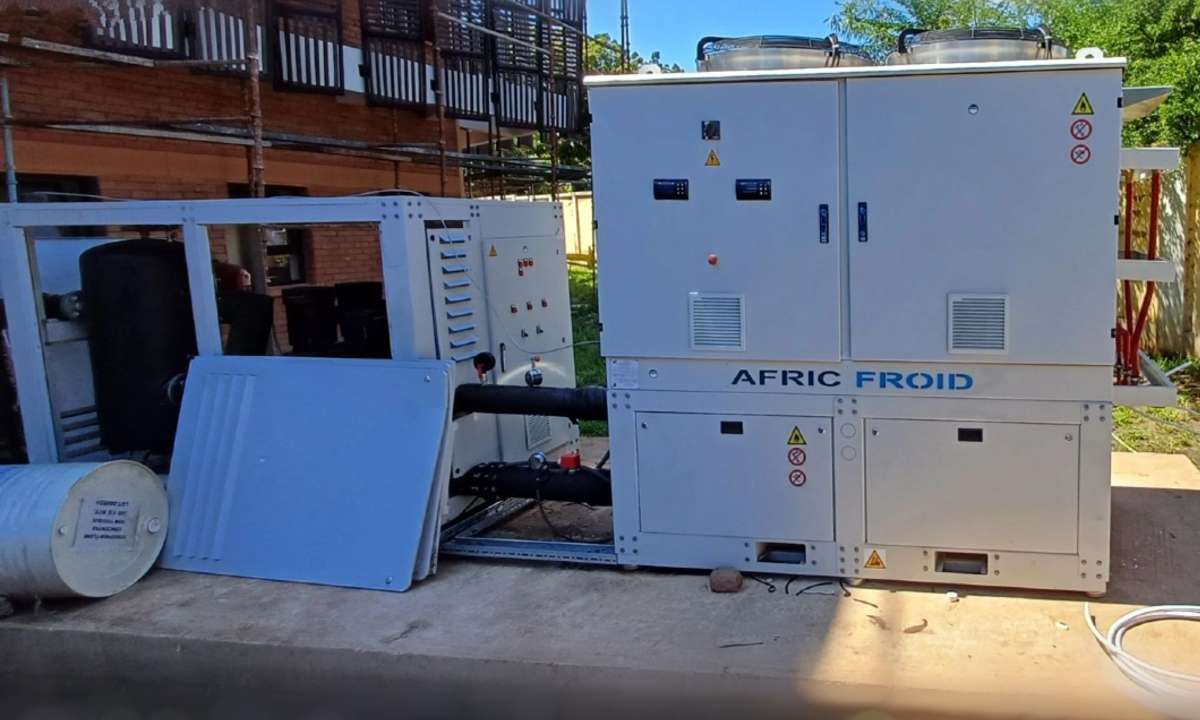
Africa has marked a milestone in sustainable cooling with the installation of its “first” propane (R290)-based chiller for air-conditioning in Ghana, according to a statement from the Green Cooling Initiative (GCI), a program operated by Germany’s main development agency GIZ (Deutsche Gesellschaft für Internationale Zusammenarbeit).
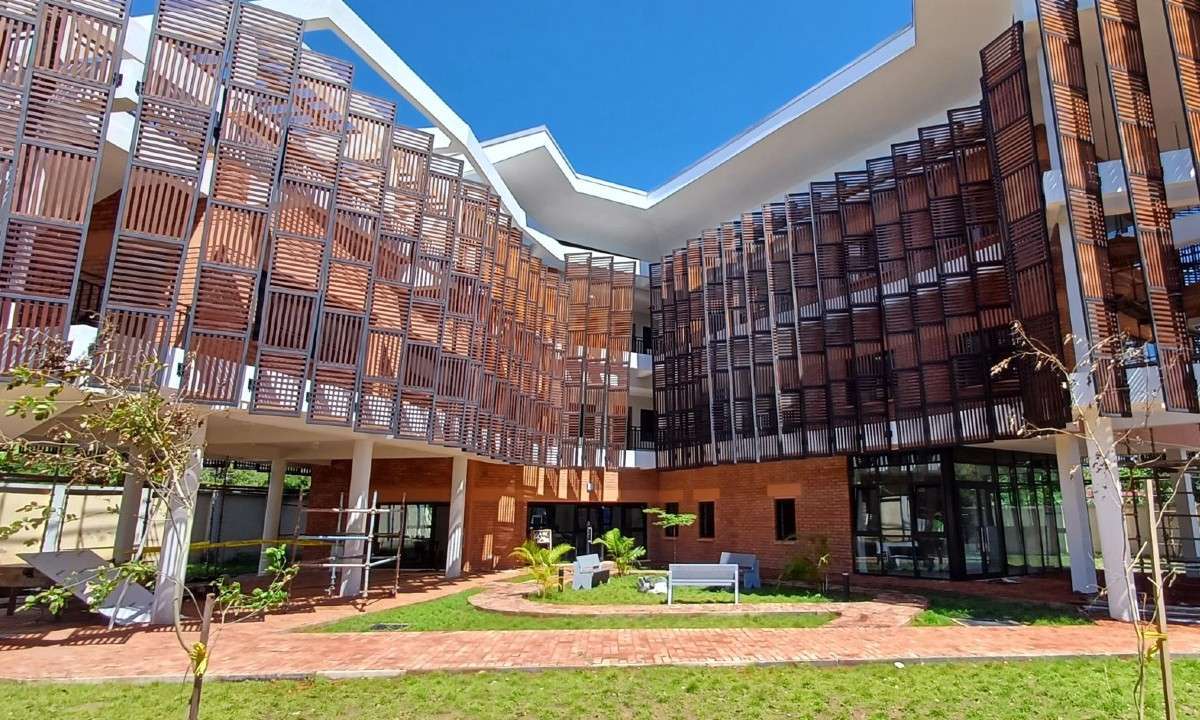
The 115kW (32TR)-capacity unit has a total charge of 8kg across two refrigeration circuits. It was installed at the Energy Commission’s new near-zero-emissions building in Accra, showcasing the potential for natural refrigerant-based solutions in hotter climates.
“The project [proves] that R290 chillers can be installed and operated safely and efficiently in tropical countries of Africa and can significantly reduce greenhouse gas emissions and energy consumption,” said Philipp Denzinger, Project Manager of GIZ Proklima.
As a tropical country, Ghana experiences only wet and dry seasons, with the temperature ranging from 22 to 34°C (73 to 93°F) year round.
“The project [proves] that R290 chillers can be installed and operated safely and efficiently in tropical countries of Africa and can significantly reduce greenhouse gas emissions and energy consumption.”
Philipp Denzinger, Project Manager of GIZ Proklima.
An energy-efficient and climate-friendly solution
With its ultra-low GWP and absence of per- and polyfluoroalkyl substances (PFAS), propane offers an environmentally friendly alternative to synthetic refrigerants. Moreover, the system’s high energy efficiency makes it ideal for hot climates like those in Africa.
“R290 is made for developing countries with high ambient temperatures,” said Jan Dusek, Co-Founder and COO of ATMOsphere, publisher of NaturalRefrigerants.com. “Simple, affordable [and] high efficiency.”
The chiller is largely powered by a rooftop photovoltaic (PV) system, further enhancing its sustainability and emphasizing the importance of the equipment’s efficiency.
Beyond powering the chiller, the solar PVs will meet around 88% of the building’s energy needs, reducing its environmental impact by roughly 50% compared to conventional structures. To further reduce energy consumption, the building’s designers incorporated passive cooling strategies such as sunshading to mitigate heat gain and double-glazed low-emissivity windows to improve thermal insulation. An advanced energy management system continuously monitors and optimizes energy use to maximize efficiency.
According to the GCI, the building serves as a “pioneering example for sustainable construction” in the region.
Building local capacity
In addition to designing and installing the system, GIZ has prioritized training local technicians and operators to ensure its safe and effective operation.
To date, GIZ has supported similar capacity-building activities across Africa, including in Uganda and Kenya, to encourage wider acceptance and adoption of R290-based technologies.
The project was implemented under GIZ’s Sustainable Energy for Climate Protection (SustainE4Climate) initiative in collaboration with Ghana’s Ministry of Energy and the Energy Commission. It received funding from the German Federal Ministry for Economic Cooperation and Development (BMZ). GIZ and HEAT, a Germany-based environmental consultancy, oversaw the chiller’s design, installation and commissioning alongside a local contractor.
The importance of clean cooling
According to the Ghana Refrigeration and Air Conditioning (RAC) Roadmap, cumulative greenhouse gas emissions from the country’s RAC sector will reach 338 million metric tons of CO₂ equivalent by 2050. By transitioning to the best-available technology, around 79 million metric tons of CO₂ equivalent could be mitigated.
“R290 chillers can contribute significantly to that emission reduction,” said the GCI. “Chillers that combine energy efficiency and natural refrigerants can reduce the total emissions by up to 60% in the Global South.”
To facilitate the wider adoption of low-GWP refrigerants like propane in Ghana, the roadmap has identified several measures, including financial incentives, sustainable public procurement guidelines and safety standards for flammable refrigerants.
Implementing bans on high-GWP refrigerants where alternatives exist is also recommended. While the Kigali Amendment to the Montreal Protocol – which Ghana ratified in August 2019 – provides an HFC phase-down schedule, a stronger political signal is required to shift the market to future-proof refrigerants, according to the roadmap.
A market shift towards sustainable technologies can also be stimulated by government procurement, explained Sustainable Energy for All (SEforALL), a UN-backed organization, in a recent report.
“Prioritizing energy-efficient cooling appliances for government buildings will set an example,” it said.
“Chillers that combine energy efficiency and natural refrigerants can reduce the total emissions by up to 60% in the Global South.”
Green Cooling Initiative