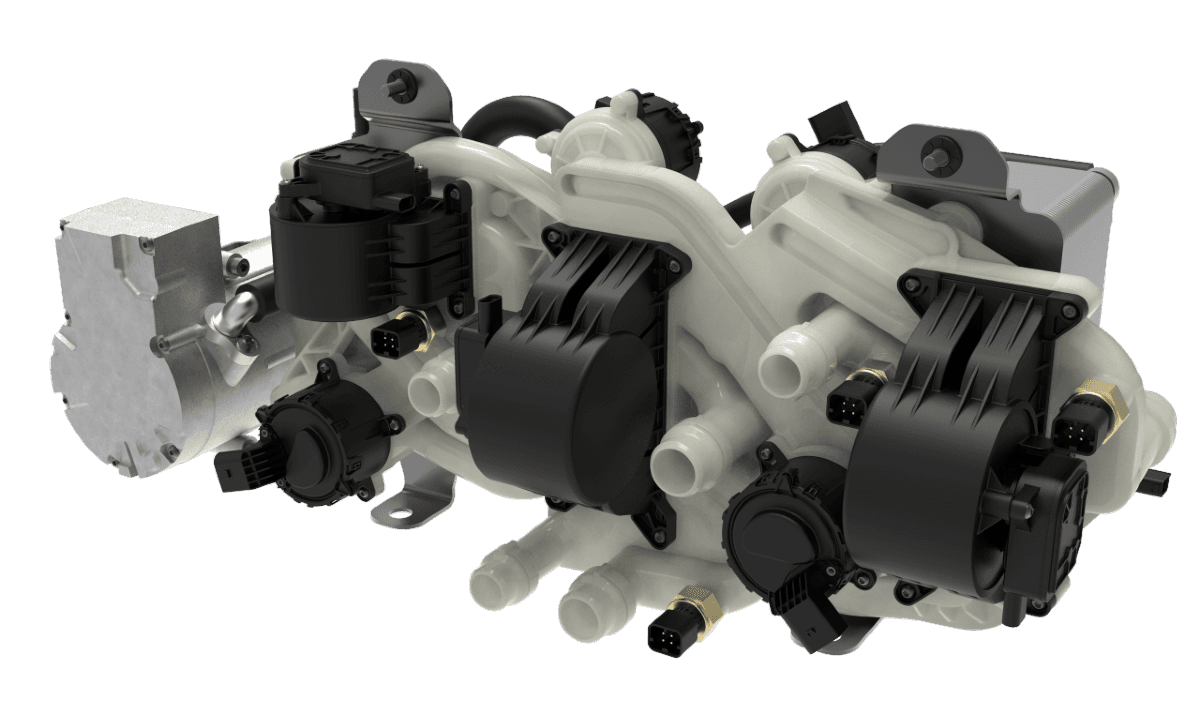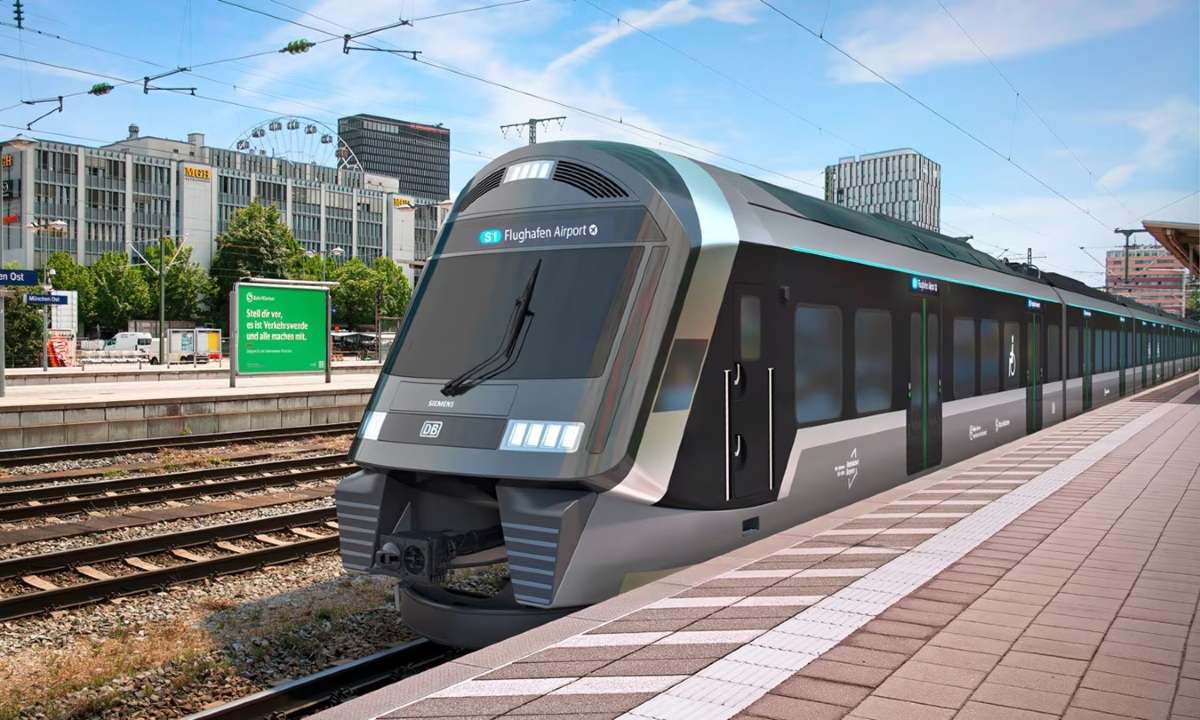
Japanese manufacturer Mitsubishi Electric has announced that its Italian subsidiary Mitsubishi Electric Klimate Transportation Systems has received an order of 1,350 propane (R290)-based HVAC units from Siemens Mobility for the next generation of trains running on Munich’s S-Bahn railway system.
Between 2026 and 2032, Mitsubishi Electric will deliver 1,170 roof-mounted HVAC units for train cabins and 180 units for train cockpits.
This marks the manufacturer’s first natural refrigerant-based HVAC unit for the rail industry, Duke Koch, Key Account Manager Transportation Systems at Mitsubishi Electric, told NaturalRefrigerats.com at the recent InnoTrans trade show in Berlin. According to the company, this is also the first time a Japanese affiliate has developed an R290 system for trains.
The new trains, commissioned by the Bayerische Eisenbahngesellschaft transport company and Deutsche Bahn subsidiary DB Regio, are designed to meet rising passenger expectations and incorporate advanced technologies aimed at reducing power consumption and maintenance costs.
Mitsubishi Electric has said that its HVAC systems will contribute to the sustainability of the trains thanks to the low environmental impact and electricity consumption of R290 as a refrigerant.
Future-proof HVAC
Traditionally, train HVAC systems rely on synthetic refrigerants like R407C and R134a. However, due to their high GWP, such refrigerants are being phased out in the EU under its recently revised F-gas Regulation. Many low-GWP options are also classified as a per- and polyfluoroalkyl substance (PFAS) and are likely to be restricted under proposed restrictions in Europe.
In contrast, R290 has a 20-year GWP of less than 1 and is PFAS-free, offering a future-proof option for train operators. While CO2 (R744) is another future-proof alternative, Mitsubishi Electric emphasized R290’s superior cooling efficiency and lower power consumption, making it ideal for rail applications.
“We believe that R290 is one of the possible candidates for rail HVAC refrigerants,” a company representative told NaturalRefrigerants.com. “We will monitor the global trends and respond to the market demands, customer requests and related regulations.”
“[Train operators] are very interested in HVAC with propane because the refrigerant is environmentally friendly,” added Koch. “That’s the biggest driver for them. I think all new projects will go with propane, especially in [Central] Europe.”
“[Train operators] are very interested in HVAC with propane because the refrigerant is environmentally friendly.”
Duke Koch, Key Account Manager Transportation Systems at Mitsubishi Electric
Due to the flammability of R290, Mitsubishi Electric has optimized the design of its HVAC unit to ensure safe operation. This includes the use of four smaller refrigeration circuits per unit rather than one larger one, keeping the refrigerant charge below the flammability limits specified by European regulations.
Seamless piping used in the train’s internal HVAC equipment prevents refrigerant from leaking into the cabin. It also helps to keep the refrigerant at a low density for added safety.
Beyond Munich
This project is part of Deutsche Bahn’s broader push to integrate R290-based HVAC units across its rail network, with a goal of having over 2,000 units in operation by 2027.
Mitsubishi Electric has said that it plans to provide R290-based HVAC systems to other rail systems across Europe and the world. According to Koch, the company is currently working with Swiss railcar manufacturer Stadler to develop R290 HVAC systems for its trains, with a focus on the German market.