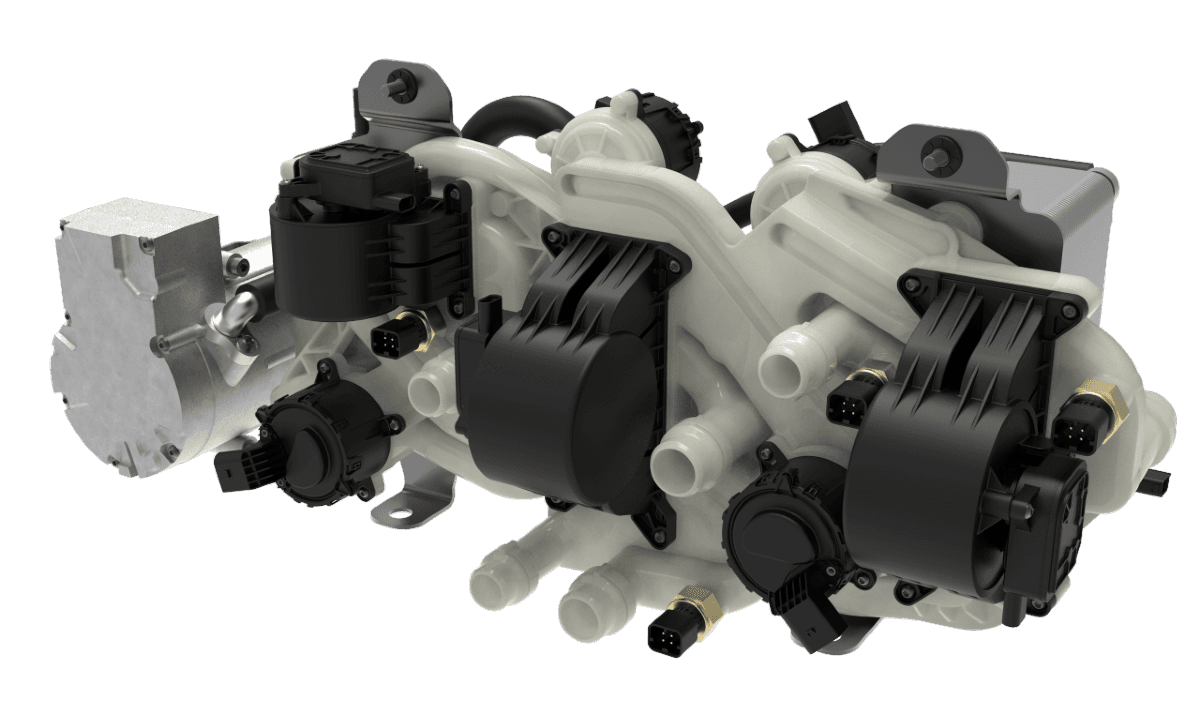
Automakers are showing “high interest” in propane (R290)-based thermal management systems for electric vehicles (EVs) according to Benedikt Schauder, Thermal Management Development Lead at ZF.
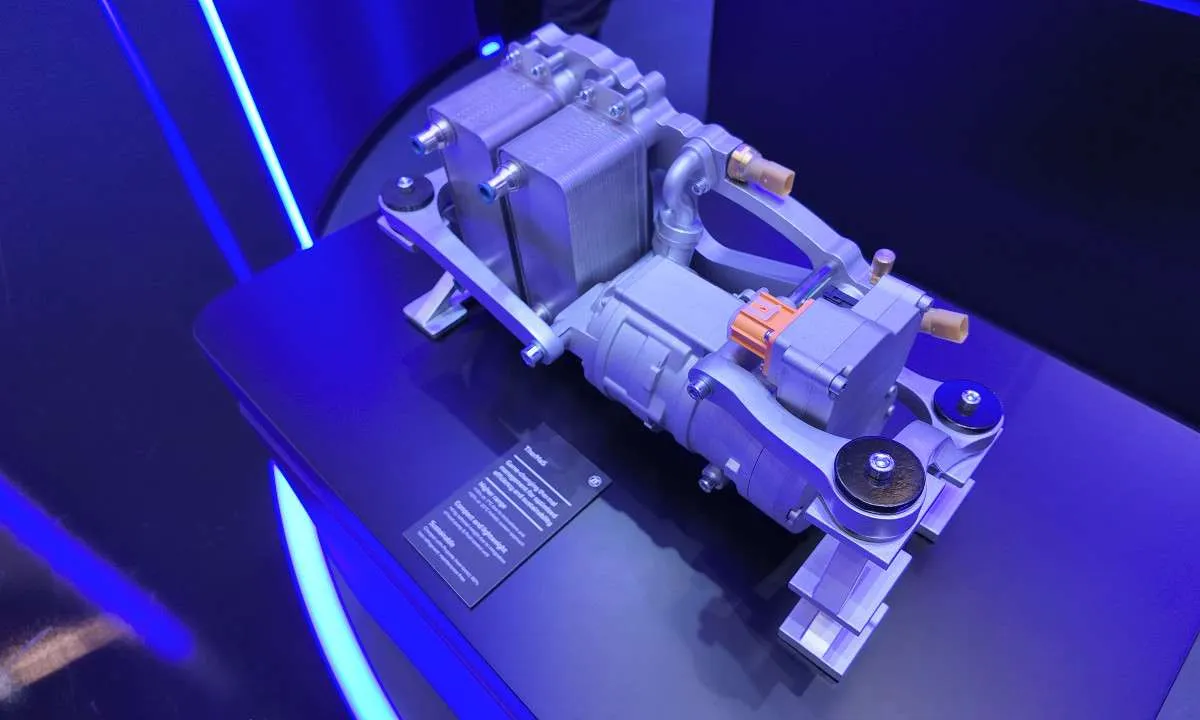
The German automotive supplier first started developing “TherMaS,” a thermal management module (TMM) incorporating an R290 heat pump, for EVs in 2021, Schauder told NaturalRefrigerants.com in an interview at IAA Mobility 2025. The automotive industry trade show was held September 9‒14 in Munich, with ZF displaying TherMaS at its booth.
Thermal management modules package the key components of thermal management systems for EVs, such as the heat pump, compressor and heat exchangers. While propane is an emerging technology in the space, Schauder said potential regulatory developments in the U.S. are piquing the interest of automakers.
“When we showcased our concept car in 2023 with R290 MAC, everyone was reluctant because there were no regulations on the horizon,” Schauder said. “With the potential changes in the U.S. regulations allowing automakers to release a single platform worldwide, we now see high interest in the unit.”
The state of play: In late 2024, ZF and other industry partners, including Ford, submitted an application to the U.S. Environmental Protection Agency (EPA) under its Significant New Alternatives Policy (SNAP) program to approve propane for use in MAC systems.
- ZF expects a positive EPA regulatory decision in 2026, followed by similar approval in Europe, Karin Markenstein, ZF’s Head of Corporate and Marketing Communications for Electrified Powertrain Technologies, told NaturalRefrigerants.com earlier this year.
- “This will be in the U.S., but it will be valid all over the world,” said Schauder. “In Europe, it’s not forbidden to use propane [in EVs], but our customers have international platforms and nobody will build a car only for Europe.”
- Angelo Patti, Product Development Engineer at Ford, called R290 “the best global option for battery electric vehicles if safety is addressed.” Patti made the statement at the ATMO MAC Summit 2024.
Design details: TherMaS provides heating and cooling capacities of up to 10kW (2.8TR) for the cabin and battery in ambient temperatures ranging from −25 to 35°C (−13 to 95°F).
- TherMaS will be available in three models but will contain the same principal layout regardless of the EV’s performance class, according to Schauder. However, the dimensions of the components will change based on the EV’s size, whether it’s a small car or a pickup truck.
- “It also simplifies service with the ability to swap in an entirely new unit as needed,” Schauder said.
- In addition, transport EV truck manufacturers have shown interest in the R290 thermal management module for cabin and battery cooling and heating, Schauder indicated, adding that it would not be used to refrigerate cargo.
Better thermodynamics: Schauder outlined the benefits of propane refrigerant in EVs for thermal management compared to the widely used R1234yf.
- “What bothers electric vehicle end users is the range drop in winter conditions,” Schauder said. He gave the example of an EV operating in an ambient temperature of −20°C (−4°F), in which case R1234yf offers a COP of 1 while propane has a COP of 1.5.
- Compared to an R1234yf-based system of similar capacity, the latest TherMaS unit increases EV driving range by 30% “in very low temperatures,” according to Schauder.
- Propane’s 96.7°C (207.7°F) critical temperature means that it also works well on the other side of the temperature spectrum in hot ambient conditions. Schauder said this is an advantage over CO2, which has a critical temperature of 31°C (88°F).
Development history: In 2021, ZF started investigating refrigerants to find the “right” one for the thermal management of future EVs, Schauder explained. Propane caught the company’s eye due to its performance in the buildings sector.
- ZF brought a concept car, based on the Porsche Taycan EV, to IAA 2023 equipped with TherMaS. At the time the system had a charge of 290g of propane.
- The second generation of TherMaS has a charge of 150g and weighs 4kg (8.8lbs) less, according to Schauder, who added that the company is working on a third-generation model.
- “We made a lot of improvements in the third-generation model,” Schauder said. “We reduced pressure losses and made a lot of CFD [computational fluid dynamics] calculations to optimize the whole system.”
Quotable: “Many of our customers tell us that if they incorporate the R290 TherMaS system, it will be as part of a new platform,” Schauder said. “This means that if and when they incorporate it, it will be sold in huge volumes.”