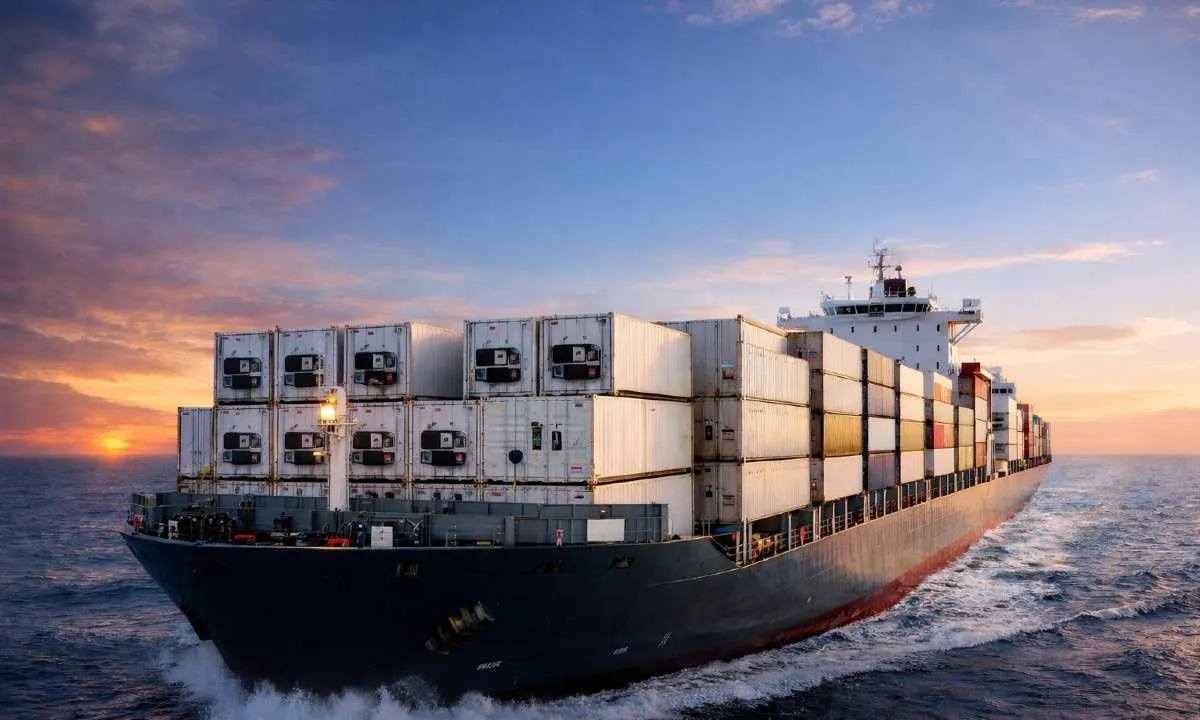
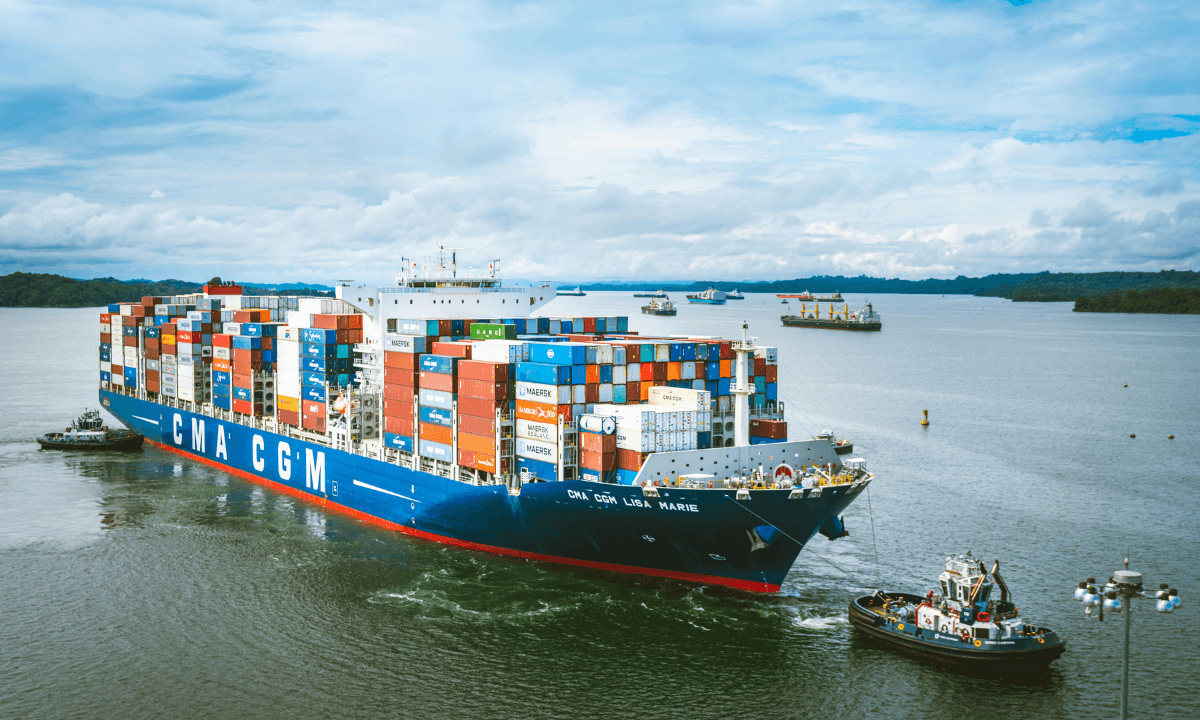
As a non-toxic, non-flammable refrigerant with a GWP of 1, CO2 (R744) is the “preferred choice” for refrigeration on passenger ships because it supports the cruise industry’s sustainability efforts, according to Manuel Reichle, Product Manager of Reciprocating Compressors at Bitzer.
The International Maritime Organization (IMO) does not directly regulate refrigerants. However, it does require ships to calculate their attained energy-efficiency index and annual carbon intensity based on greenhouse gas emissions. Reichle outlined maritime CO2 refrigeration, along with Bitzer’s compressor and gas cooler adaptations, in a presentation at the IRN (Industrial Refrigeration Network) 2026 conference. The event, hosted by Bitzer, was held June 10‒11 at the company’s training center in Rottenburg am Neckar, Germany.
“We have adapted our four- and six-cylinder transcritical and subcritical CO2 compressors for marine applications, with DNV, BV and LR type approvals available,” Reichle said. “Recently, we made our eight-cylinder compressors available in a marine version, optimized for water management, with a 690V, 60Hz motor.”
The conference highlighted developments in natural refrigerant technologies for industrial refrigeration and heat pumps, with presentations covering CO2, ammonia (R717) and hydrocarbon systems. Speakers included representatives from Compact Kältetechnik, Evapco Europe, Johnson Controls, Vahterus, Star Refrigeration and Fenagy. Around 110 people from 19 countries attended the event.
Harsh conditions: Refrigeration systems in the maritime sector must accommodate the ocean’s pitch and roll, secondary water-cooling systems operating with varying seawater temperatures and tight machinery spaces.
- Along with updating the electric motor for its CO2 compressors for marine applications, Bitzer also optimized the oil management, verifying the compressor’s ability to maintain operations at inclination angles up to 22.5° as outlined by classification requirements.
- Bitzer’s GT shell-and-tube gas cooler can withstand temperature differences of 70–90K (70–90°C/126–162°F) between the CO2 refrigerant and the cooling water, without “risking thermal fatigue or damaging thermal stress on the material,” Reichle said. The unit supports capacities up to 1.2MW (341TR) per heat exchanger, with the CO2 side rated at 130bar (1,885psi) at 150°C (302°F).
- Additional machinery considerations include leak detection and ventilation systems for refrigeration equipment installed at the bottom of ships, modular designs to accommodate retrofit projects and long lead times for newbuilds, with refrigeration systems installed two to three years before commissioning.
The market: Globally there are 320 cruise ships in operation, with 74 in various stages of production over the next 10 years, according to Reichle.
- The design of CO2 systems for marine vessels largely mirrors that of land-based installations, with maritime regulations requiring indirect cooling through a secondary glycol loop.
- Large cruise ships with up to 7,000 passengers require up to 2MW (569TR) of medium-temperature (MT) cooling capacity at a −15°C (5°F) evaporation temperature and up to 0.4MW (114TR) of low-temperature (LT) capacity at −38°C (−36°F).
- Cruise ships represent only a fraction of the industry requiring refrigeration, with other sectors including ferries, river vessels and tankers.
A few examples: Reichle highlighted several marine CO2 refrigeration applications, including pilot projects and system designs that demonstrate the technology’s sustainability potential.
- A new roll-on/roll-off passenger ferry operating between Poland and Scandinavia features “the world’s first DNV-certified CO2 chiller,” according to Bitzer. Manufactured by Aeron and Sinop, the HVAC unit delivers 510 kW (145TR) of cooling capacity at 15°C (59°F) cooling water and 410 kW (116.6TR) at 38°C (100°F), using three six-cylinder and two four-cylinder Bitzer compressors along with the company’s water-cooled GK gas cooler.
- A new 4,500-passenger cruise ship features a CO2 refrigeration system produced by Johnson Controls, providing 455kW (129.3TR) of MT capacity and 155kW (44.1TR) of LT capacity. The CO2 system also supports the ship’s HVAC system by supplying 70‒90°C (158‒194°F) hot water from recovered waste heat to drive an absorption chiller.
- Beyond newbuilds, Reichle noted that recovered waste heat from CO2 refrigeration systems could improve onboard energy efficiency by covering heating loads, particularly when ships are in port.
Quotable: “Good things are coming back,” Reichle said, noting that CO2 refrigeration was used in ocean vessels in the 1880s. “[The industry] needs a safe and future-proof solution to secure and protect the long asset life cycles of ships. CO2 systems that combine natural refrigerants and the things required in the IMO classes offer that solution.”
“Recently, we made our eight-cylinder [CO2] compressors available in a marine version, optimized for water management, with a 690V, 60Hz motor.”
Manuel Reichle, Product Manager of Reciprocating Compressors at Bitzer