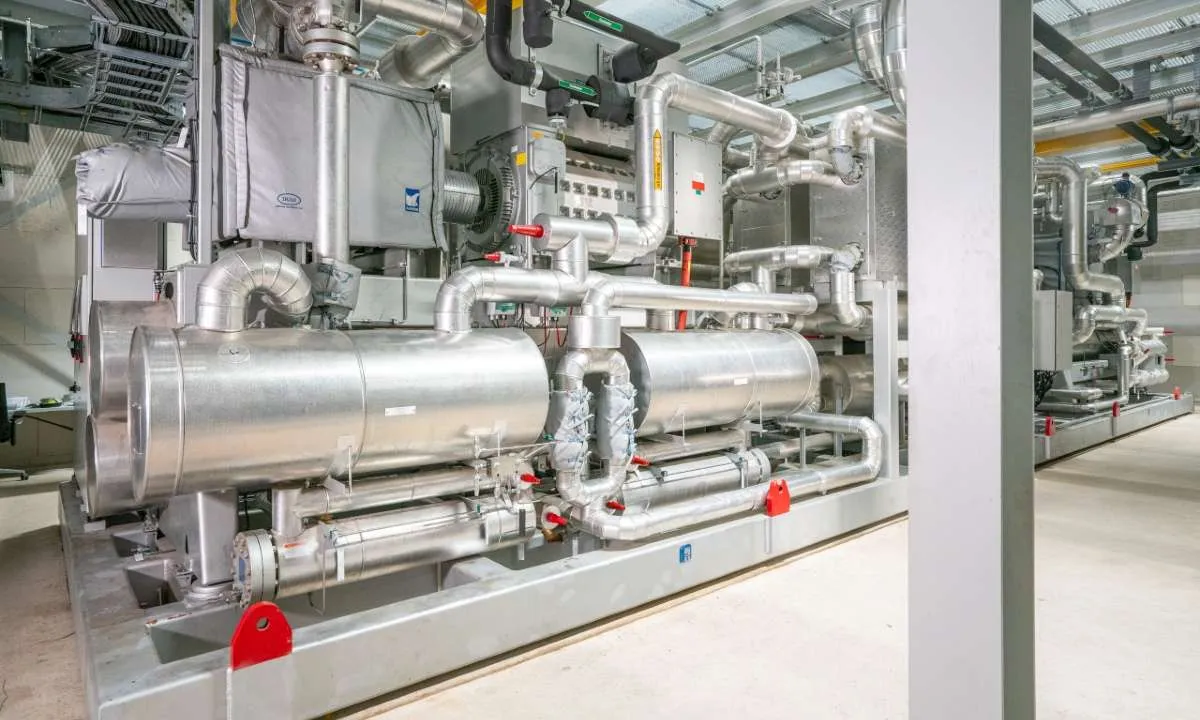
German HVAC&R manufacturer GEA has supplied a 24MW (6,824TR)-capacity ammonia (R717) heat pump system to a district heating facility at a combined heat and power (CHP) plant operated by Estonian utility provider Utilitas.
Located in Tallinn, the system consists of four 6MW (1,706TR) ammonia heat pump units that recover waste heat from an onsite biomass incinerator.
This project marks the first installation of GEA’s new Grasso L XHP screw compressor, which has been designed specifically for heat pump applications. Compared to the modified refrigeration compressors the company previously used, its new compressors can improve the efficiency of its ammonia heat pumps by 5–8%, according to Kenneth Hoffmann, Product Manager at GEA.
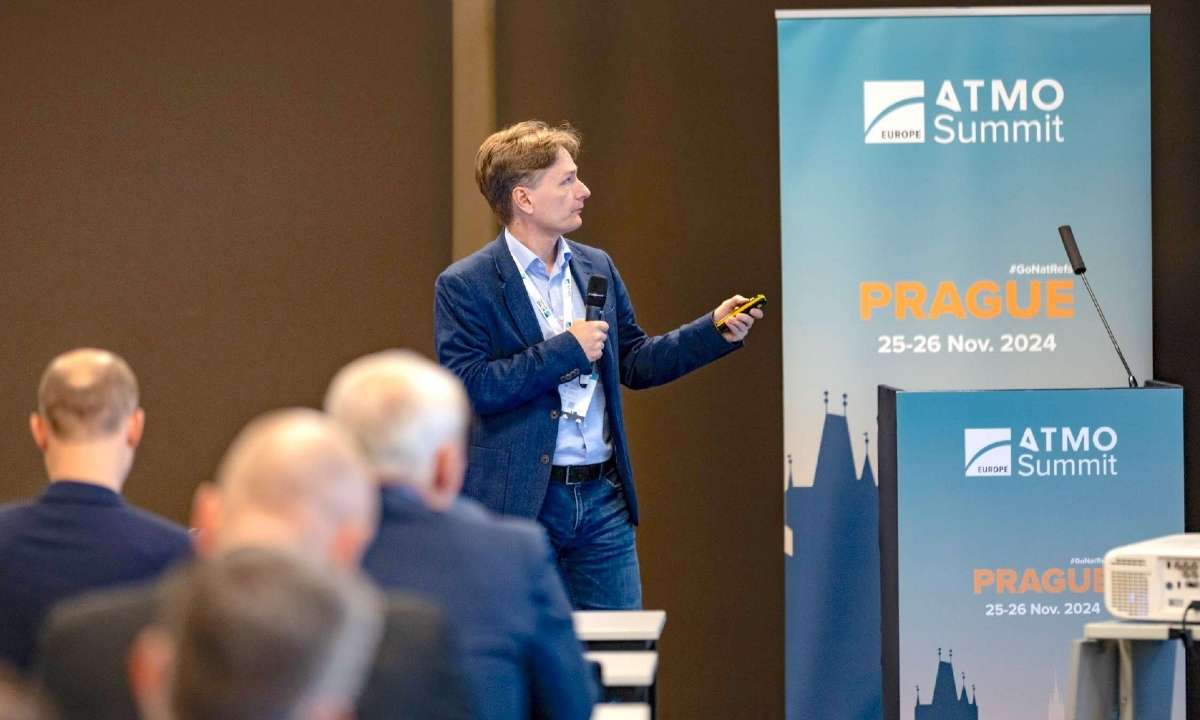
Hoffmann shared details of the installation during his presentation at the ATMOsphere (ATMO) Europe Summit 2024. The event was organized by ATMOsphere, publisher of NaturalRefrigerants.com, and held in Prague, Czech Republic, from November 25–26.
Indirect heat recovery
Around 20% of the combined heat and power (CHP) plant’s heat is recovered via condensation from the flue gas and reused by GEA’s heat pumps, Hoffmann explained.
“The woodchips that are burned at the plant contain 30–50% water, providing a great source of energy to recover,” he said.
Source water temperatures of 22–32°C (71–89°F) are elevated by the heat pumps to produce hot water temperatures of 47–85°C (116–185°F) for Tallinn’s district heating network.
Due to the design of the plant, heat is harvested from the flue gas indirectly via a heat exchanger. According to Hoffmann, direct systems can improve heat pump efficiency by having higher source temperatures. Direct heat recovery also negates the need for a filtration system, which helps avoid any impurities in the water clogging the heat exchanger in an indirect system.
“We’ve done that on other sites, so it’s definitely possible,” he said.
The plant also features air heat exchangers to cool steam generated during biomass incineration if the heat pumps are not in operation.
Reducing emissions and costs
Since commissioning in early 2024, the heat pumps have operated for approximately 2,500 hours, or half a heating season, achieving a COP above 4 and exceeding customer expectations, Hoffman said.
Each heat pump can adjust its output to operate at 30–100% of its nominal capacity, ensuring flexibility based on demand.
By recovering waste heat and eliminating the need for gas boilers, Utilias is reducing its annual CO₂ emissions by around 20,000 tons per year, helping to fulfil its decarbonization and cost savings targets, he added.
The project marked Utilitas’s first ammonia heat pump installation, highlighting that while R717 has been widely used in industrial applications for many years, it is not yet common in district heating. Hoffmann noted that this unfamiliarity underscores the need for increased awareness and education within the sector.
Earlier this fall, Markham District Energy announced it would be installing single-screw ammonia-based industrial heat pumps to power its wastewater energy transfer facility in downtown Markham, Ontario (Canada). In Germany, a two-stage ammonia heat pump will play a pivotal role in the country’s first large-scale seawater district heating system.
Updating district heating networks
District heating has been used in Estonia for decades and is widely employed across the country, with more than 60% of buildings connected to district heating networks.
Utilitas provides district heating to nine Estonian cities, including Tallinn, and is investing in decarbonizing its networks and making them more efficient, Hoffmann said.
“It’s proven over and over again that the best way of decarbonizing our heat is by electrifying it, and if you want the best COP for [electrification,] then heat pumps are the way forward,” he explained. “There has been a huge change in the last few years with regards to heat pumps, which are now an accepted technology.”
While Hoffmann could not confirm whether Utilitas plans to expand its use of heat pumps to other networks, he emphasized that the Tallinn project demonstrates their potential benefits.
“It’s proven over and over again that the best way of decarbonizing our heat is by electrifying it, and if you want the best COP for [electrification,] then heat pumps are the way forward.”
Kenneth Hoffmann, GEA