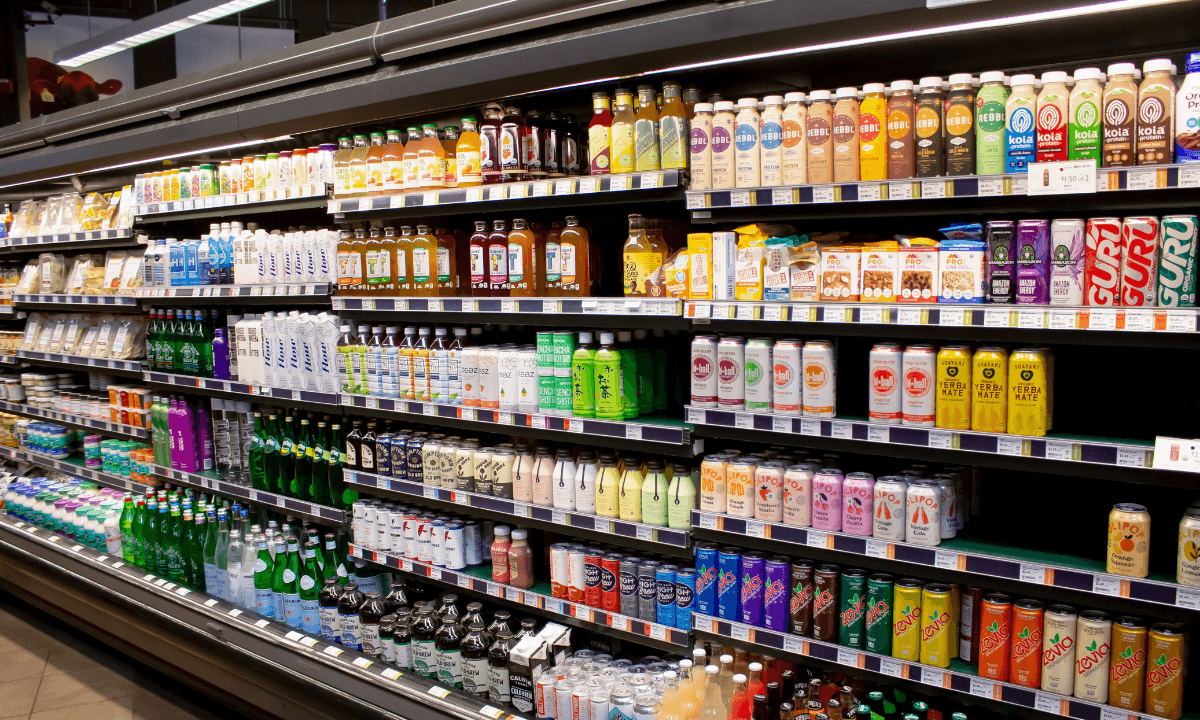
The U.S. Department of Energy (DOE) in December announced new energy efficiency standards for self-contained commercial refrigerators, freezers and refrigerator-freezers that would take effect in 2029, four years after publication in the Federal Register, helping to further solidify the use of propane (R290) refrigerant in this equipment.
The rule was published in the Federal Register on January 21, 2025.
However, federal regulations issued after August 1, 2024, could be subject to the Congressional Review Act and be overturned by the Republican-controlled 119th Congress.
These self-contained units, which are connected to an internal or remote condensing unit, are typically used to display refrigerated or frozen food in retail stores. The DOE also announced new efficiency standards for walk-in coolers and walk-in freezers.
The Energy Policy and Conservation Act (EPCA) prescribes energy conservation standards for various consumer products and certain commercial and industrial equipment, including commercial refrigerators, freezers and refrigerator-freezers. The EPCA requires the DOE to periodically review its existing standards to determine whether more stringent standards would be “technologically feasible and economically justified” and would result in “significant energy savings.”
According to the EPCA, the DOE is required to review its existing energy conservation standards for covered equipment no later than six years after release of the previous standards. For commercial refrigeration equipment, the last efficiency standards were announced in 2017.
Design options used to achieve the updated standard levels are already commercially available for all equipment classes covered by the final rule. Equipment using propane as the refrigerant is particularly suited for the task. In fact, DOE has accounted for efficiency trends by assuming that all self-contained units will have transitioned to R290 by the compliance year (2029).
Energy used per volume of space
The efficiency standards are expressed in maximum daily energy consumption in a particular volume or area of display space. For example, a self-contained vertical closed transparent cabinet providing medium temperature with a display volume less than or equal to 100ft3 (2.8m3) could not exceed an energy expenditure (kWh/day) of 0.073 times display volume, plus 0.630. By contrast, the previous maximum energy consumption for this equipment was 0.1 times display volume, plus 0.86.
The DOE also specified the average life-cycle cost (LCC) savings in 2023 dollars and the simple payback period in years for each piece of equipment that adopted the new regulations. For example, a self-contained vertical closed transparent cabinet providing medium temperature with a display volume less than or equal to 100ft3 would achieve an LCC of $33.20 (€32.30) and payback period of 6.5 years.
The average LCC savings are positive for all equipment classes, and the payback period is less than the average lifetime of commercial cabinets, which is estimated to be 14.0 years.
The DOE’s analysis over a 30-year time frame (2029–2058) concludes that the new regulations would save 1.11 quadrillion BTUs, a savings of 6.5% relative to a scenario without new efficiency standards.
The DOE estimates the cumulative net present value of the energy standard to range from $1.32 billion (€1.29 billion) at a 7% discount rate to $3.43 billion (€3.34 billion) at a 3% discount rate. This expresses the estimated total value of future operating cost savings (2029–2058) minus the estimate increased equipment cost. In addition the new standards are projected to result in cumulative emission reductions over the same period of 19.7 million MT of CO2 generation.
The DOE noted that it is not, at this time, amending standards for large-capacity commercial refrigerant equipment in a number of classes. Large-capacity equipment in these classes would remain subject to the current energy conservation standards applicable to those classes beginning on March 27, 2017. For example a self-contained vertical closed transparent cabinet, providing medium temperature, would be considered large-capacity with a display volume greater than 100ft3.
Larger-capacity commercial equipment could use A2L refrigerant, such as R454C, rather than R290, said the DOE.
This article was updated on January 22 with a reference to publication of the new commercial cabinet efficiency regulations in the Federal Register.