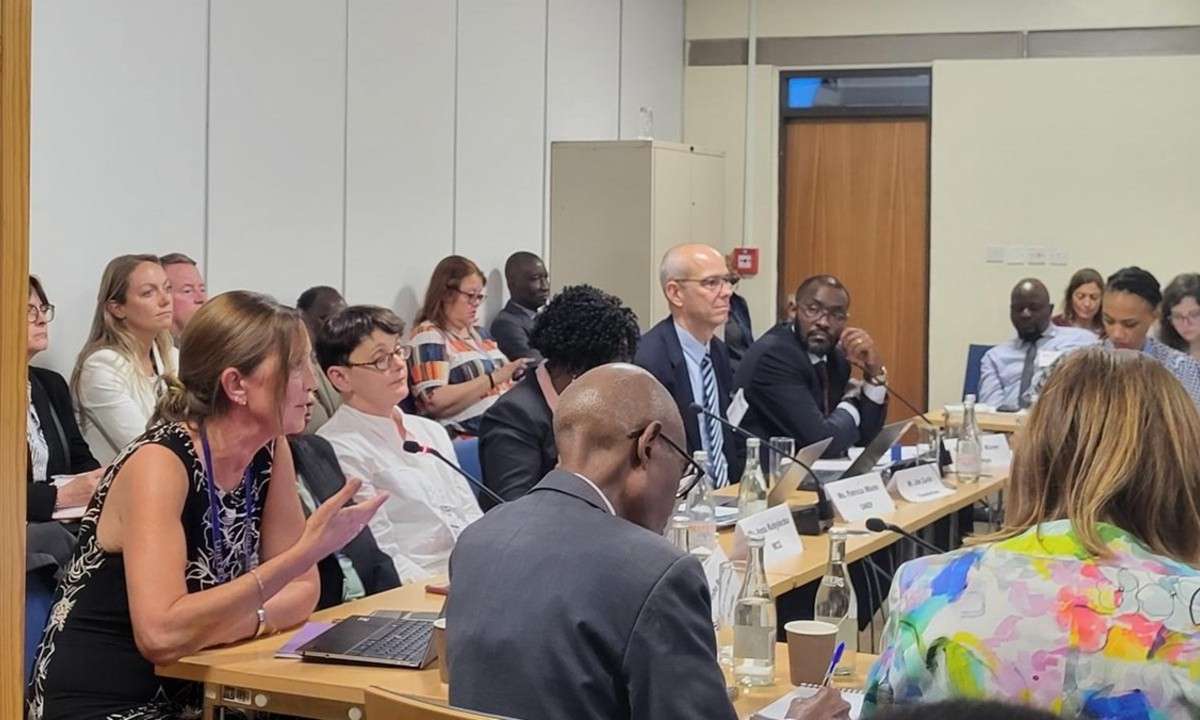
A proposal by the EU and Switzerland aimed at reducing the emissions of ozone-depleting feedstocks used to produce refrigerants like HFOs was blocked in a contact group meeting at the 37th Meeting of the Parties (MOP37) to the Montreal Protocol in Nairobi, Kenya, held November 3–7, according to environmental groups that attended the meeting.
A contact (discussion) group on feedstocks met four times to address a proposal on feedstock uses of controlled substances that had been originally made by the EU and Switzerland at the 47th meeting of the Open-Ended Working Group (OEWG47) of Parties to the Montreal Protocol, held in Bangkok July 7–11. Controlled substances include ozone-depleting refrigerants and HFCs.
The proposal invites parties to the Montreal Protocol to provide the Ozone Secretariat “with any available data on emissions from different processes for the production or use of feedstocks and on the technologies used for emission reduction” by March 31, 2026. It contains several other provisions, including reducing emissions “through the use of practical control techniques or modification of processes, sequestration or destruction” and regular reporting on feedstock emissions by the Montreal Protocol’s Technology and Economic Assessment Panel (TEAP).
Two of the primary HFOs on the market today – HFO-1234yf and HFO-1234ze(E) – use ozone-depleting feedstocks: the former HCFC-22 and carbon tetrachloride and the latter carbon tetrachloride. The Environmental Investigation Agency (EIA) reported in July that consumption of HFOs) and HCFOs in the U.S. is projected to more than double by 2030, reaching approximately 106,000 metric tons – up from around 40,000 metric tons in 2021.
Saudi Arabia and India strongly opposed the EU/Switzerland proposal, according to a blog post by Clare Perry, Climate Campaign Leader of the U.K. branch of the EIA, who attended the contact group meetings. Saudi Arabia took issue with the request for regular reporting by the TEAP, while India refused to agree to a request for parties to share information on emissions from feedstocks, wrote Perry.
Perry noted that the Montreal Protocol’s Scientific Assessment Panel (SAP) and the TEAP consider emissions from feedstocks “not insignificant” and that the TEAP has confirmed it could produce a report on feedstocks. Nonetheless, Saudi Arabia and India blocked acceptance of two out of three “operative paragraphs” of the EU/Switzerland proposal, she wrote, adding that the U.S. and Australia blocked the other paragraph.
“When [feedstock] emissions from literally just a handful of fluorochemical companies around the world are as high as this, it’s hard to understand why countries such as India insist that there is no obligation to even share information to help understand and mitigate them.”
Clare Perry, EIA U.K.
The Earth Negotiations Bulletin, a division of the International Institute for Sustainable Development (IISD), also reported on the feedstocks contact group on its website.
On the last day of meetings, the group engaged in a lengthy discussion on the added value of the EU/Switzerland proposal, “with some parties highlighting that the SAP and the TEAP are already undertaking the proposed tasks and questioning the merit of such a decision,” wrote the Bulletin, adding, “Others pointed out that the Assessment Panels had indicated that they would welcome additional guidance.” In the end the group was “unable to find a compromise,” noted the Bulletin.
Perry called the feedstocks group “probably the most frustrating contact group of [MOP37].” In 2022 the SAP assessed emissions for a range of regulated ozone-depleting feedstocks to be as high as 146 million metric tons of CO2e in 2019, she noted, adding that this is more than the combined emissions last year of the 63 lowest-emitting countries in the world. “When [feedstock] emissions from literally just a handful of fluorochemical companies around the world are as high as this, it’s hard to understand why countries such as India insist that there is no obligation to even share information to help understand and mitigate them,” wrote Perry.
Moreover, she wrote, in the Montreal Protocol treaty, Article 9 on research, development, public awareness and exchange of information “contradicts India and Saudi Arabia’s position entirely.” The provision requires parties to cooperate in promoting research, development and exchange of information on best technologies for improving the containment, recovery, recycling, or destruction of controlled substances or otherwise reducing their emissions.
The Indian and Saudi Arabian delegations did not respond to a request for comment.
The HFC-23 emissions gap
MOP37 also addressed global emissions of HFC-23, one of the most powerful greenhouse gases with a 100-year GWP of 14,600 (IPCC, AR6). Measured emissions of HFC-23 remain significantly higher than reported data, “raising compliance concerns” with the Kigali Amendment, the HFC-reduction part of the Montreal Protocol, wrote Perry.
HFC-23 has historically been primarily generated during the production of HCFC-22, which has been prohibited globally as a refrigerant. HFC-23 destruction is mandatory for parties to the Kigali Amendment.
The parties asked the science and technology panels to provide an update on HFC-23 at MOP38, including additional analysis of the emissions gap and information on the way that countries estimate and report HFC-23 emissions, wrote Perry. Countries with HCFC and HFC production were requested to examine the HFC-23 issue at the national level and encourage scientific collaboration, she added.
“To understand and address these significant emissions, we need more data and particularly more transparency from the global fluorochemical industry,” Perry noted.
Two recent studies have confirmed that HFO-1234ze(E) breaks down in the atmosphere to produce a small amount of HFC-23.